


Coralia Dua is a new premium Indonesia liveaboard launching in 2026, designed for comfort, space, and exceptional diving across Raja Ampat, the Banda Sea, Halmahera, and other world-class destinations. She offers eight well-appointed cabins, a dedicated camera room, a spacious dive center, and outdoor dining areas ideal for relaxing between dives. Coralia Dua also features the signature comforts of Coralia Liveaboards, including generous lounging areas and an exceptional crew known for warm, attentive service. With an onboard masseuse and modern amenities throughout, she blends traditional Indonesian craftsmanship with contemporary design to create one of the most inviting luxury liveaboard experiences in Indonesia.
At 52 meters long and over 10 meters wide, Coralia Dua offers expansive living spaces across every deck, elevating the luxury liveaboard experience in Indonesia. Guests can relax on the sky deck, unwind in open-air lounges, or enjoy panoramic ocean views from the many shaded and sun-filled seating areas.
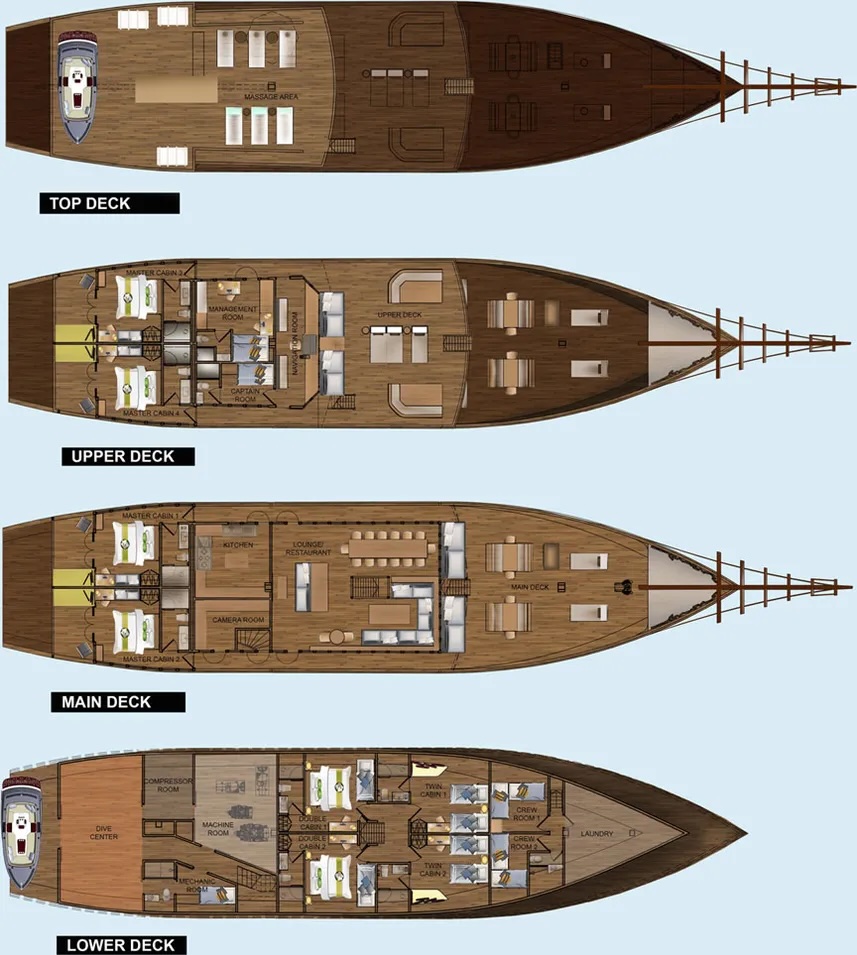
The main deck features a full-width camera room designed for underwater photographers, along with an elegant air-conditioned lounge and dining area for refined service between dives. Complimentary satellite WiFi keeps guests connected when coverage allows, and an onboard masseuse provides soothing treatments on the sky deck, the perfect retreat after exploring Indonesia’s world-class dive sites in Raja Ampat, Banda Sea or Komodo.
Master Cabins (4)
The four Master Cabins on the main and upper decks offer 35 m² of bright, spacious comfort with a private deck overlooking the ocean. Designed for guests seeking a premium Indonesia liveaboard experience, these cabins provide extra space and privacy ideal for couples or travelers exploring Raja Ampat, Komodo, and other world-class dive destinations. The Master Cabins are named Klyxum, Annella, Sansibia, and Nephthea.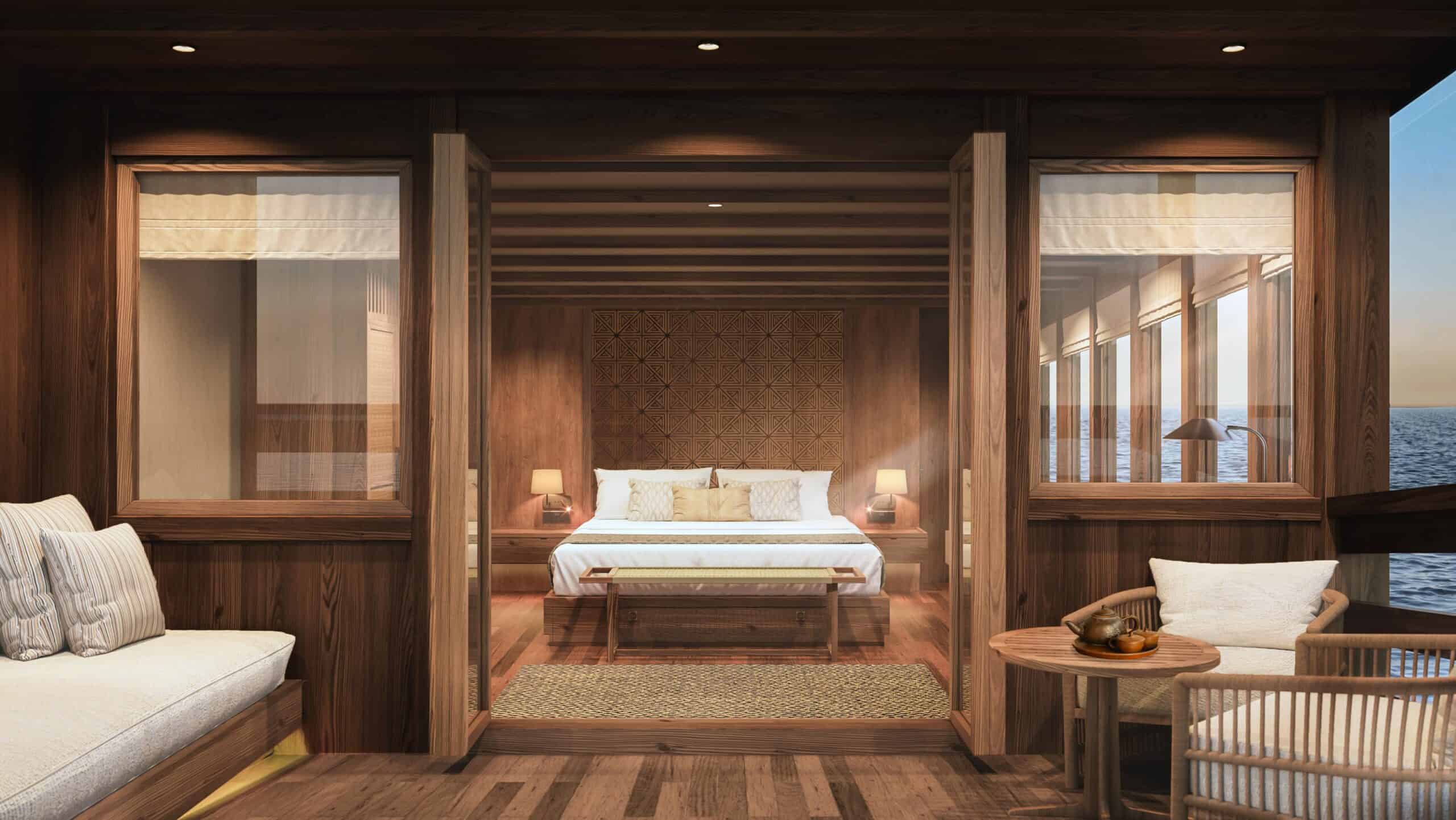
Deluxe Cabins (4)
The four Deluxe Cabins on the lower deck offer comfortable accommodation for guests looking for a premium liveaboard experience in Indonesia. These include two double cabins and two twin cabins, each designed to provide a bright and quiet retreat during your journey. The double cabins can be arranged for triple occupancy with a sofa that converts into a twin-sized bed, making them a convenient option for groups or friends diving together. The Deluxe Cabins are named Orbicella, Millepora, Favia, and Acropora.
SAFETY ON BOARD
Aboard Coralia Dua the safety of our guests and crew is our top priority, and the vessel is equipped with comprehensive modern safety features. These are regularly maintained, and our team is fully trained to use them in any emergency. Please refer to the detailed list below.
Man Overboard (MOB) device
EPIRB (Emergency Position-Indicating Radio Beacon)
Satellite phone
4 x 25 persons inflatable life rafts
Life vests
Life rings
Safety flares
Smoke detectors in each cabin
Fire extinguishers
Fire balls
Fire hoses
Fire suppression system
Fire escape masks
First aid equipment
Emergency oxygen
Nautilus LifeLine (one per buddy team)
AED (Automated External Defibrillator)
TECHNICAL SPECS
Year built 2018
Length 52 meters
Beam 10 meters
Top speed 9 knots
Cruising speed 7 knots
Engines Mitsubishi Marine 560 hp & 360 hp
Max guests 16
Number of cabins 8
Number of bathrooms 9
Tenders 2
Water capacity 10000 liters
Fuel capacity 12000 liters
Freshwater maker 10000 liters
Contact us for complete itineraries, available dates/rates & bookings!
Raja Ampat - 7-12 night itineraries (Sorong to Sorong) Nov-Apr
Raja Ampat is right in the heart of the Coral Triangle and has over 1,500 islands. Many scientists believe Raja Ampat has the most coral and fish diversity in the world! Raja means King and Ampat means Four – Four Kings. The four kings are the main islands in Raja Ampat – Waigeo, Batanta, Salawati, and Misool.
Starting from Sorong in West Papua, we head to the south of Raja Ampat’s largest island Waigeo to the famous Dampier Strait. We will select the best dive sites for the experience of the divers and according to the current weather conditions. Here, you can expect to dive at some world-class, adrenalin-packed dive sites such as Cape Kri, Chicken Reef, Sleeping Barracuda, Sardine Reef, Mioskon, and Blue Magic. Our guides can take you to places where the current meets the reef head-on, where you can witness predatory fish like black tip, white tip, and grey reef sharks, giant trevally, Spanish mackerel, and dogtooth tuna hunting huge schools of smaller fish like fusiliers and big eye jacks. Seamounts and long reefs offer this hunting action as well as sightings of bump-head parrotfish, napoleon wrasse, turtles, and manta rays.
At the other end of the Dampier Strait is the island of Arborek with a great jetty dive. Lalosi is a drift dive completely full of fusiliers and with a chance to see wobbegong sharks. The well-known manta aggregation sites of Manta Sandy and Manta Ridge are also in this area. Sawandarek is on the island of Mansuar and the dive on the reef and jetty in from of the village is a fantastic dive. You can also visit Papua Explorer’s coral restoration project here. For those interested, we can take a walk around the village at Sawandarek or Arborek.
After a night dive on our first day of diving, we will travel to Penemu. Famous Melissa’s Garden awaits us with its spectacular, healthy, and wide-spread hard coral plateau in the shallows. At Keruo Wall, we can admire large gorgonian sea fans and lovely reef tops, and we might also explore My Reef and Batu Rufus. A short hike to the viewpoint of Penemu offers a spectacular view of the lagoons and their surrounding islands.
Next, we make our way to Wofoh. Wofoh has several unique dive sites easily reachable from one mooring point, allowing us to relax in this incredibly scenic area. On one side, we will have the backdrop of Wofoh and Taman Wofoh, two small islands with pristine white coral sand beaches, and on the other side, we can take in vistas of the forested mountains and valleys of West Waigeo. The dive sites at Wofoh are famous for stunning black coral forests, where schooling fish are on the constant run from larger predatory fish. The walls are interesting with ledges and shallow caverns where it is not uncommon to find wobbegong sharks. Wofoh has some very healthy hard corals in the shallows, where dense schools of anthias and damsels can be found.
We will do one or two dives at Wofoh before heading into Aljui Bay. The afternoon and night dive will be at Aljui Bay, where will be on a critter hunt. Inside this bay, there is also an opportunity to take a little tour to visit the pearl farm and learn all about how pearls are grown. A late afternoon dive at the pearl farm jetty might be possible and it can be full of schooling fish and wobbegong sharks. During the night dive, it is not unusual to find macro favorites like toadfish, octopus, and Epaulette walking sharks.
The next day, we will dive on the island of Kawe. Here, the dive site Black Rock awaits us, soft corals bloom in a variety of colors from the rocky outcrops, amazing us as Raja Ampat’s full abundance comes to life in a most vibrant display. Eagle Rock is our next stop and is named for the majestic eagles circling above the small, rocky islands. Underwater, divers can encounter creatures like wobbegong sharks, schools of sweetlips, batfish, barracudas, bump-head parrotfish and reef sharks, even the occasional manta ray! We will go back into Aljui for another magnificent night dive with the critters.
The following day will be spent on the western tip of Gam Island, at an island called Yangeffo, which protects a sheltered bay. This small area has multiple world-class dive sites. Famous ones like Citrus Ridge and Mayhem always amaze divers with their vibrancy and biodiversity. The area here is probably so abundant due to the surrounding mangroves. Beautiful hard and soft corals grow under and among the roots of the trees, so a dive at Mangrove Ridge is truly enjoyable. And our crew will be happy to take you out in the dingy to snorkel in the mangroves in between dives. Sunsets and sunrises are very special at our mooring point at Yangeffo: as the sun drops, the surrounding forested hills become alive with flocks of Sulphur Crested Cockatoo and Blyth’s Hornbills emerge to return to their roosting places.
At Dayang, in the northwest of Batanta, there is a beautiful small sandy island home to a population of Coconut Crabs. Dayang is just at the entrance to one of Batanta's many scenic bays and has a colorful reef with wobbegong sharks, schooling yellow snappers, and great macro-life, including pygmy seahorses and unusual nudibranchs. Dayang Island also offers a great chance to encounter manta rays, the gentle giants, at their cleaning stations. In the south of Batanta, there are some great macro dives in the sandy slopes.
The remainder of our adventure will be spent diving in the Dampier Strait. Our last day will offer two more action-packed dives in the Dampier Strait. We can also arrange for a bird-watching trip on the last morning to see the enigmatic and endemic Red Bird of Paradise. After lunch, we make our way back to Sorong for hearty goodbyes.
Please note: This is a sample itinerary. Itineraries may change without further notice due to weather conditions or other unforeseen circumstances.
Cenderawasih Bay - 10 + 11 night trips (Jul/Aug)
Cenderawasih Bay western edge is a National Park and Indonesia’s largest. This area is part of the Bird’s Head Seascape, along with Raja Ampat and Triton Bay. It is a new dive destination, complete with the highlight for many, whale shark encounters. The entire area is unspoiled and has a very small population, with many parts uninhabited. In the Bay, there are over 500 different species of corals and you will see some of the healthiest hard coral gardens. There are dramatic walks full of sponges and atolls full of schooling fish.
From Manokwari, we will head out into the National Park. There are some critter dive sites that we can explore either at the start or near the end of the trip. At Pulau Purup there are several dive sites and we will spend the whole day here. On the southeast tip, there is a sloping reef with many elephant ear sponges and other soft corals. Here we could get our first glance of an endemic fish only found in Cenderawasih Bay – a flasher wrasse Paracheilinus Walton.
At the other sites, you can see schooling fish, especially fusiliers, barracuda, and other endemic fish, this time in the damselfish family Chrysiptera Pricei. Reef sharks can also be seen cruising the shallow hard coral reefs.
Roon is our next stop. There are ridges lined with hard corals and sloping walls with sea fans and colorful soft corals. Divers can look for Bumphead parrotfish, reef sharks, schools of fusiliers, and turtles. There is even a small waterfall on the beach that flows into the sea.
Close to Roon is Pulau Rippon. There is a wreck of a World War II plane with the rest of the dive site forming a slope with pretty corals. At another spot, the white sandy bottom rises up into stunning coral patches covered with soft corals and elephant ear sponges. There are turtles, schools of surgeonfish, and barracuda alongside some interesting macro subjects. Yet another endemic fish can be seen around Pulau Rippon. A Dottyback Pictichromis Caitlinae can be found in cracks and crevices.
Tanjung Mangguar has one of the most beautiful dives in Cenderawasih Bay. The site is completely covered in soft coral and attracts a lot of fish life. A school of barracuda hangs out here, along with trevally, fusiliers, and surgeonfish. Look out into the blue for possible sightings of manta rays, Mobula rays, and sharks. The shallows here are also impressive. There is a good night here too.
Next, we will go to Kwatisore Bay for the chance to see whale sharks. The whale sharks come to feed at the Bagans (fishing platforms) here. This is a natural behavior, the whale sharks have learned that if they suck on the fishing nets the fishermen’s catch comes out of the holes! The fishermen believe these huge fish bring them good luck. They throw handfuls of fish to the whale sharks to keep them close to their Bagan.
We will arrive in the area in the late afternoon to ask the fishermen who have seen whale sharks that day. We can then arrange to visit early the next morning. If we get lucky we might see more than one whale shark and they have been known to stay with us for hours! Having close-up encounters as the whale sharks circle round and round, opening their mouths wide and sucking in the fish, is one of the most incredible experiences you can have.
On the way back up to Manokwari, we will spend some time at the Tridacna Atoll. There are several dive sites in this area. Here we dive at deep drop-offs and fringing reefs carpeted in soft corals, large barrel sponges, sea whips, and massive elephant ear sponges. The surrounding deep ocean means that the dive sites here are some of the fishiest in the Bay.
On the last full day on board we will do two dives inside Manokwari harbor. During World War II Manokwari was occupied by the Japanese and there are some excellent wrecks that we can explore here. There are a huge Japanese freighter and a former coastal patrol boat that is now encrusted in corals and home to lots of marine life. We will enjoy our goodbye dinner inside the harbor.
The last dive will be on the penultimate day of the trip. Divers are recommended to wait for 24hours before flying after the last dive.
Please note that the itineraries are examples only, We reserve the right to change the itinerary or specific agreed services, if force majeure, unforeseen or unavoidable circumstances require us to do so.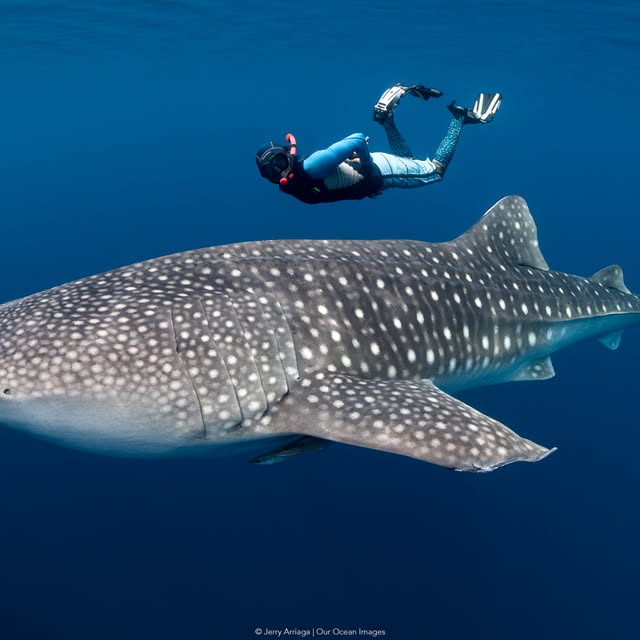
Other Destinations
Alor, Forgotten Islands and Banda Sea Liveaboard Diving
The Forgotten Islands and the Banda Sea can be dived on Coralia Du as part of a dedicated Forgotten Islands cruise. The Banda Sea will also be visited during our trips from Ambon to Raja Ampat in October and November or back again in April.
Cruises to the Forgotten Islands can start in Maumere, with this embarkation point the trip will also include Alor. You can read more about cruises through Alor here . The other option is to start in Saumlaki, on the island of Tanimbar, and finish in Ambon.
Komodo
Diving in Komodo offers an exciting variety of dive sites and experiences. Komodo National Park is home to the world’s largest lizard, the Komodo Dragon. This area is a World Heritage Site and one of the New 7 Wonders of the World.
Komodo has it all! Beautiful soft coral reefs, exhilarating drift dives, spectacular hard coral reefs, fishy pinnacles and black sand muck dives. Komodo is home to a large population of manta rays, large schools of fish, turtles, reef sharks and a myriad of weird and wonderful fish and critters!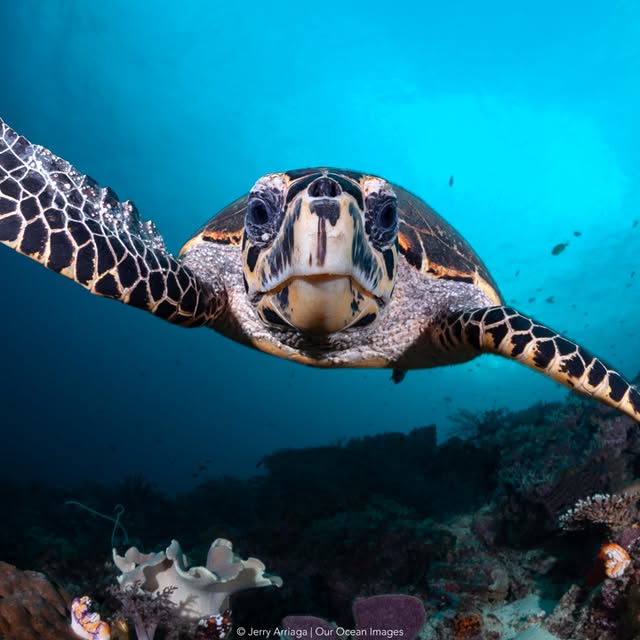
Launch Sale - Early Bird Savings
10% off 2026 trips
5% off 2027 trips
Plus, return guests of Coralia or Papua Explorer for additional 10% off