
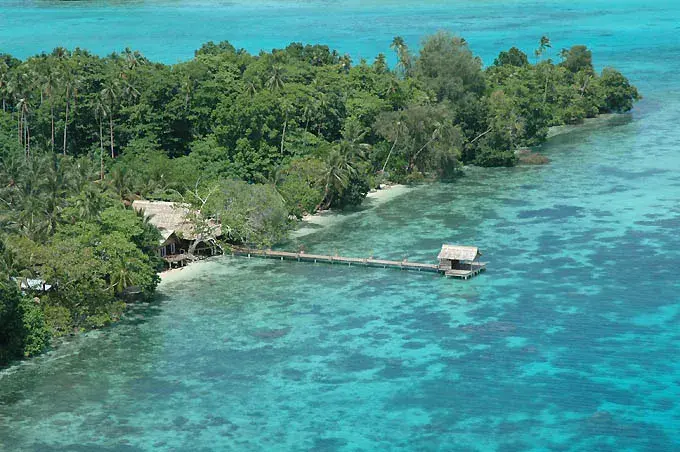
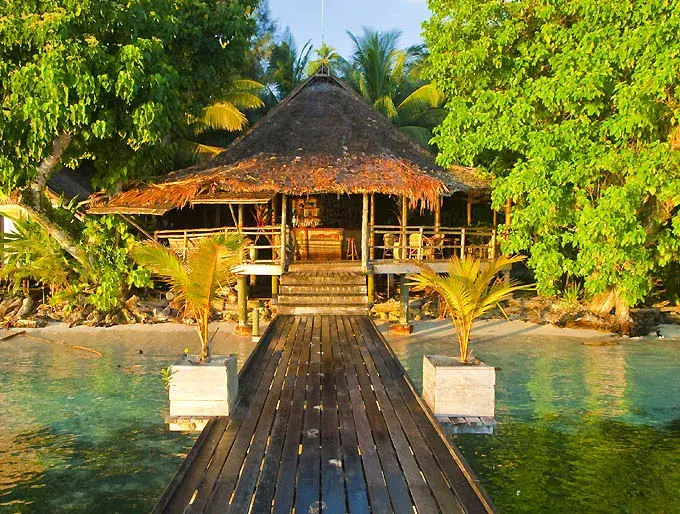


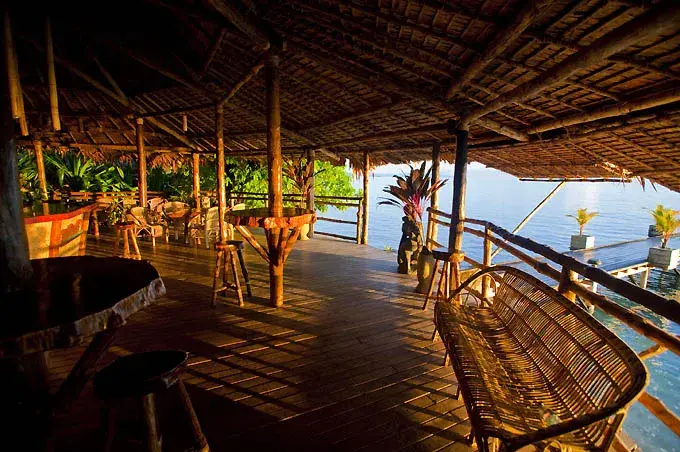

Sanbis Resort, Solomon Islands, promises an intimate beachfront haven with only six bungalows, each offering private beach access and crafted from local materials. Catering to adults only, this eco-friendly gem is a mere seven-minute boat ride from Gizo, providing secluded luxury for up to 12 guests. Enjoy king-size beds, en-suite facilities, and a communal lodge with stunning views and a six-person spa—perfect for couples or small groups seeking tranquility.
There’s also a completely separate and private Lodge consisting of a main building that has three split levels with a living/entertainment area with TV screen, Hi-Fi and wireless internet. The lower level has a “mini kitchen” with dining area, lounge and a sun deck with a BBQ facility and Spa bath. Immediately next to the main house are two fully air-conditioned bungalows with ensuite bathroom and a small veranda overlooking the lagoon and several islands. A private jetty is in line with the main building and a boat is provided with the rental of the Lodge for exclusive use by “The Lodge” guests, giving residents the freedom to explore parts of the Gizo lagoon. This is an absolutely idyllic place for two couples, a family with two elder children or friends on a dive trip. Sanbis Island is suited for adults looking to get away from the world, as no children under 12 years old can stay here. Facilities also include WiFi internet access for those who want to keep in touch with the outside world during their stay in paradise.
Solomon Watersports is a PADI affiliated dive center operating daily boat dives to over 20 magnificent dive sites. The house reef is a macro photographers dream and host to two plane wrecks, mainly inhabited by frogfish. Most of the islands in this province are ringed by coral and offer a wide variety of dive sites, from shallow water atolls to plunging walls and sensational WW ll wrecks. The marine life is spectacular, resulting in some of the most photogenic seascapes in the world. ‘Grand Central Station’ is one of the best fish dives in the Solomons. Drift along with schools of Spanish mackerel, barracuda, sharks and rays. ‘Hot Spot’ is an undersea atoll rising from the deep, and playing host to large pelagics, colorful coral and seven types of anemone fish--a diver’s dream dive.
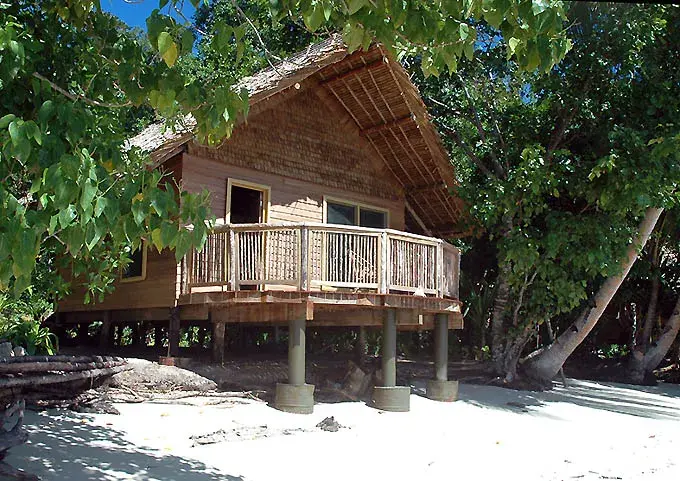
Sitting amid coastal trees and coconut palm is your Leaf House Villa with its veranda over a tranquil lagoon. Opened in 2005, Sanbis Resort is for the holiday- maker who wants something unique.
To maintain total exclusivity, the resort has six bungalows, generally limited to 12 guests at any one time. Each bungalow incorporates a modern ensuite bathroom with hot shower, has its own secluded beach and is totally separated from the others. Sanbis Resort a “KIDS FREE” haven most of the year (no children under 12 years of age) however Queensland School holidays permits kids from 4 years and over to enjoy Sanbis.
The beautifully appointed beach bungalows are all made from local materials apart from the bathroom fit-outs, which have a European style feel. Proper, ceiling fans run 24 hours a day.
Fresh drinking water is provided daily, hot water for tea and coffee is available in thermos bottles, which are replaced twice a day. Whilst you have dinner, our staff visits your bungalow for a quick clean up, spray for mosquitoes and lights a kerosene lantern so you can find your way when returning to the bungalow for the night. (All lighting works 24 hours a day as it is all run by our Solar battery bank).
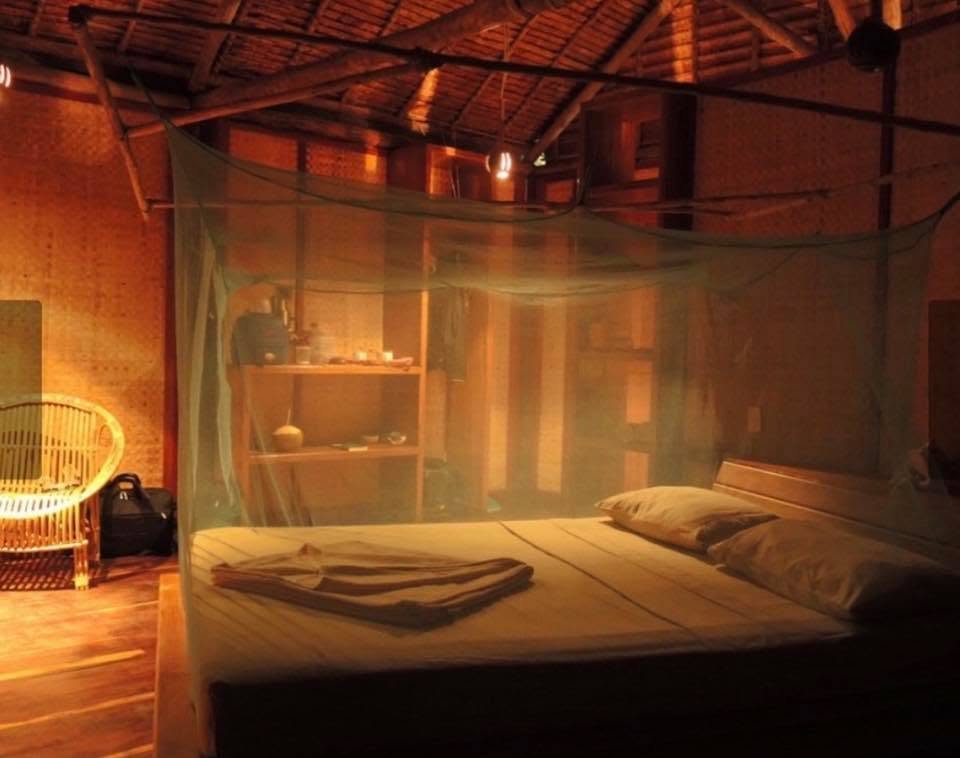
Although, Mosquitoes are few and far between, all bungalows have insect screens on windows and a large mosquito net over the Queen sized beds. The finest pure cotton sheets, (360 stitches per inch) are provided. Each bungalow has very fluffy bath towels and an additional set of beach towels to use around the resort.
Due to the fact that we follow ecologically sound guidelines, we unfortunately cannot provide refrigeration in the bungalows, however, if need be, you can keep your items in one of our fridges or freezers at the restaurant.
Please note that we have two bungalows, which are a little larger than the other four – ideal to share between 3-4 divers, a small fishing group or a family with up to 2 elder children.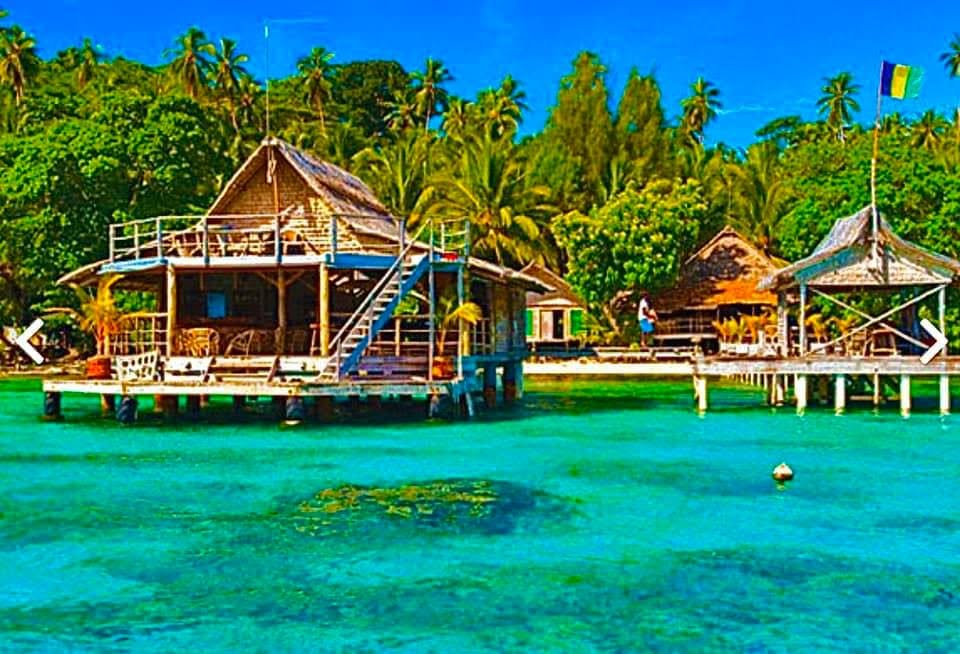
Gizo Island, in the Western Province is the gateway for some world class diving. It has a vast array of fish & fauna plus some sensational World War II wrecks. The Western Province is comprised of a scattering of islands, many uninhabited. Most of these islands are ringed by coral and offer a wide variety of dive sites, from shallow water atolls to plunging walls. The gin clear water opens up an amazing display of sea whips, giant gorgonian fans and an immense display of hard and soft corals. Sharks, pelagic fish, turtles, eagle rays are ever present plus huge schools of reef fish make our dives memorable. The marine life is astounding and so spectacular it has some of the most photogenic seascapes in the world.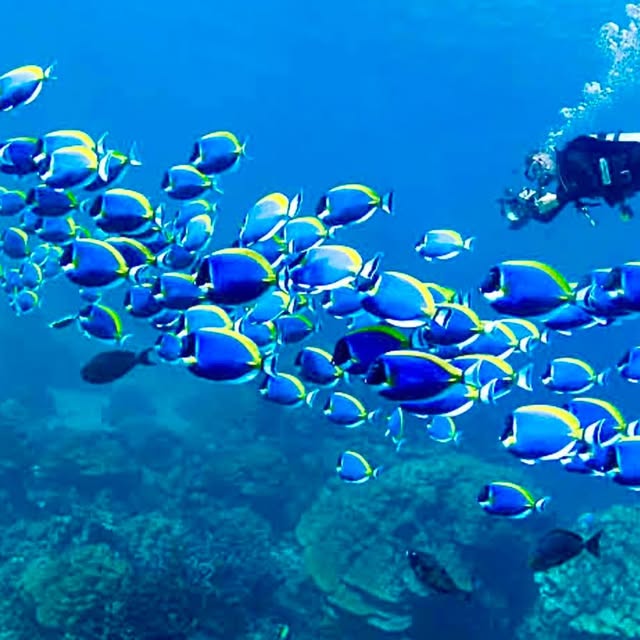
Dive Sites
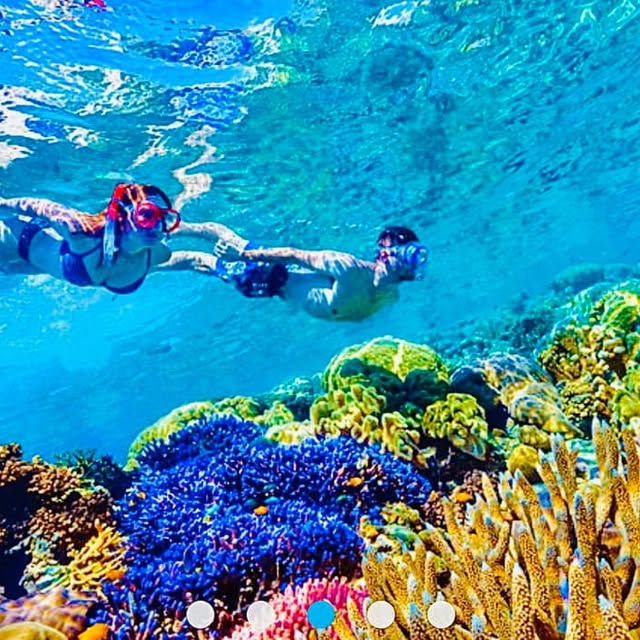
Our own Wreck, a Solomon Islands Tuna Fishing boat, which we sank on September 28 – 2008, right in front of the resort. It lies in 9 metres of water with the deck being about 5.5 metres from the surface. A great artificial reef and fantastic for a night dive starting at the resort jetty. Brilliant for snorkelling and exploring the myriad of small fish hiding in the cargo holds.
Kennedy Island
This Island, known locally as Plum Pudding Island, now lends its name from the late US President John F. Kennedy who was ship wrecked with his crew off the boat PT109, during World War II. It is a sandy beached island that’s great for beginners, on the inside reef, and more experienced divers on the outer reef.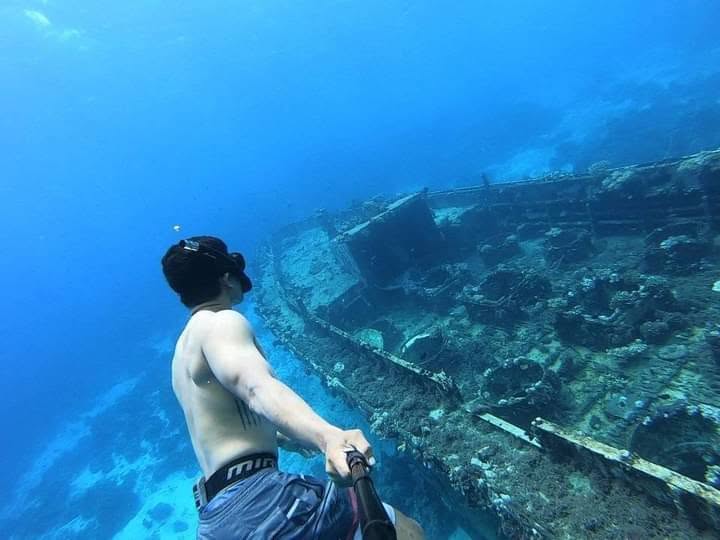
Naru Gap
This is the main entrance to Gizo lagoon. Often an exciting high speed drift dive, due to the volume of water entering the gap. It’s a fun drift, where you can float effortlessly along the reef watching bump head parrots and sharks swim by. Whilst over head the eagle rays glide silently past.
Naru Wall
A multi level drift dive on the outer side of Naru Gap. This dive site stretches for nearly 1000m in length. Starting at a deeper depth, look for pelagic fish and sharks in the blue water of Fergusson Passage. In the shallower depths there are a myriad of small reef fish flitting around the soft and hard corals.
Grand Central Station
If it’s action you want, this is one of the best fish dives in the Solomon’s. The dive starts as a drift dive until you reach a point where we encourage you to simply stop and observe. As the currents merge, large schools of fish congregate including Spanish mackerel, dogtooth tuna, barracuda a variety of sharks, eagle rays and travally. This big fish dive is a photographer’s heaven.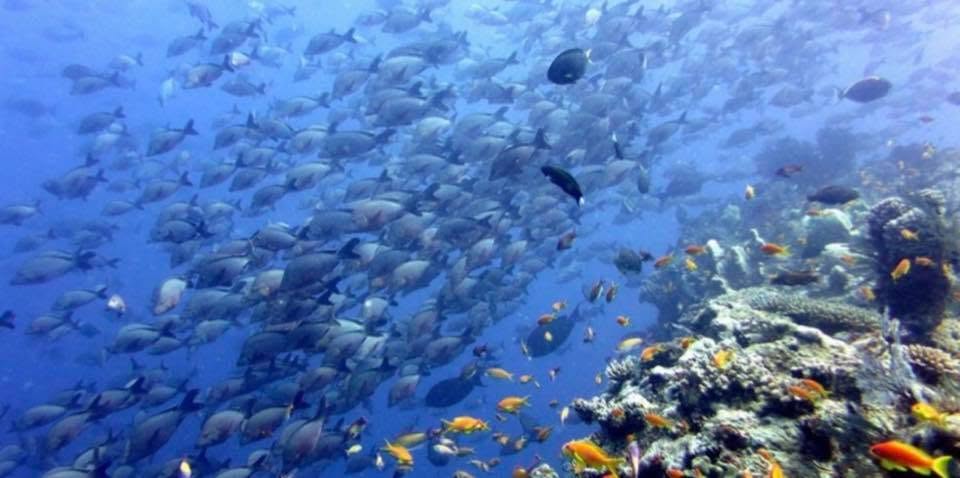
Hot Spot
This aptly named reef is an undersea atoll rising from 60m+ to 5m. It’s a hot spot for all the ocean creatures to congregate. On single dive schools of barracuda, several species of shark, turtles and sea snakes can be spotted easily. This reef must have one of the most colourful safety stops around, and is home to seven types of anemone fish, scorpion fish and stone fish. A diver’s dream dive.
One Tree Reef
Various coloured soft corals jostle for space against a back drop of hard corals covering this sloping reef. Sea fans grow to huge proportions, hiding nudibranchs and small fish. A sharp eye may even spot some pygmy seahorses. White tip and black tip reefs make this a favourite site.
Shark Alley
A total adrenaline dive, not for the feint hearted. A deep drift dive with inquisitive sharks all around you. Up to four species can been seen at one time. Mantas are sometimes seen too out in the blue water.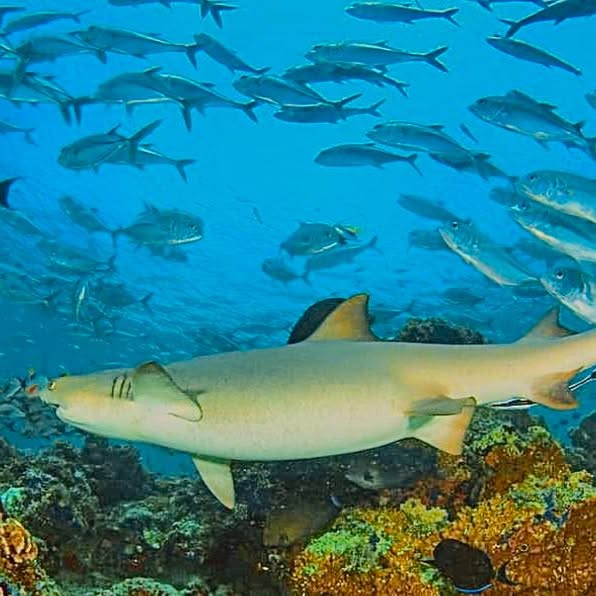
Hoppa’s Garden
A shallow reef dive in a lush coral garden. The abundance of coral trout and clown fish, make this dive site great for photography.
Dazza’a Knob
The dive starts on a large bommie that drops away into the blue, before coming alongside a wall for a drift dive. An awe-inspiring variety of pelagic fish flash past, leaving you feeling like the proverbial fish out of water.
Tukula Pinnacle
A pinnacle that starts at around 18m and falls down to 60m. Here large concentrations of potato cod are found, with an abundance of reef fish darting everywhere. Sleeping white tips can be found on the lower reaches of the reef.
Toa Maru
This 6700 ton 140m (450ft) Japanese transport ship is an awesome wreck dive. The Toa Maru, ran aground during an American air attack on Jan 31st 1943, after suffering severe damage. She lies on her starboard side, with her bow in 7m and her stern in 37m of water. She still holds various artifacts from the Second World War, including saki bottles, a one man tank, cement bags and lanterns. There are some safe swim throughs via torpedo hole, and for the experienced divers penetration is possible. This dive site needs numerous dives to be explored completely; with wonders around every corner.
Big Dip
A high speed drift dive. Catch the current right and you are off on a fair ground ride with an electrifying commotion of colour. This nutrient rich current attracts schools of bait fish, with their accompanying predators.
Manta Point
A cleaning station for manta rays. On the right day, up to 20 mantas can be seen bustling for a space, like at the car wash. This dive continues with a lazy drift along coral garden, where you can see bump head parrots grazing and smaller reef fish scuttling between the corals.
Nusa Aghana Beach Dive
A laid back, relaxing drift dive along a wall that stretches for over 1km. large gorgonian fans dominate this wall.
Tokyo Maru
A deep dive for the wreck enthusiast. This 100ft wreck is a Japanese tuna boat, which hit the reef one dark night, in 1988, and now lays in 40m of water.
Joes Wall
This immense drop off is completely awe-inspiring. Above, you can see the surface clearly, yet below the water turns an inky blue, with no bottom in sight. The wall is festooned with colourful soft and hard corals, showing a marked contrast with the water.
American Hell Cat Fighter
A wreck that time forgot! A nearly completely intact fighter plane in only 10m of water. Great for photography, a dive not to be missed.
Olasana Island Safari Reef
A reef system that stands out from the rest due to the giant elephant ear sponges, that grows all along this reef. Colonies of sand eels are found here. This is a great site for both experienced divers and trainees.
Corsair
This American fighter plane lies in 28m of water. It is broken into five large pieces and is now covered in soft corals. The safety sop area is very pretty and is home to plethora of anemone fish.
House Reefs
A macro photographers dream! A muck dive with a difference! There are two plane wrecks, a Zero and a floatplane in 16 to 10m of water, right in front of the Gizo hotel jetty. Time has not been very kind to these wrecks, but sections of the planes are shelter for schooling fish. Frog fish have made the floatplane their domain, with up to eight being seen on a single dive.
Fishing
Reefs that are alive and busy. Reef fishing can be done on either a 8m Oceantech longboat powered by twin 100Hp four strokes or a 22 foot Yamaha longboat set up with a single 100Hp Yamaha, a shade canopy and centre console for walk around fishing.
There is a good range of medium and light tackle from 25 kg down. Most of the fishing is TROLLING, but POPPER casting and LIGHT SPINNING has recently gained enormous popularity. There is no wasted time as the chain of reefs around Gizo Lagoon is right at our doorstep. Ideally no more than 3 people 3 lines at any one time. This includes all fishing gear, gimble, harness, lures, local guide and boat as pictured. Please note, any lost lures are charged at cost plus 20%. Fishing equipment consists of 80 W Tiagra’s, Abu Carcia 50lbs reels, Okuma 50TLs and there is a choice of a great range of lures.
Surfing
We regularly have surfers staying at Sanbis resort. Doug Spong (Ex Rip Curl, Billabong and then his own brand Cult) for example just recently stayed at Sanbis and will be back again soon.
There are three usually good breaks: Titiana (LH), Paelongge (RH) and Outside Naru (RH)). Titiana is about 13 minutes from Sanbis by boat, Paelongge about 20 minutes and Naru about 7 minutes.
The best time for surf is during the Australian cyclone season but best is between November and end of April when we have N/NW winds. Particularly if there is a cyclone somewhere south towards Australia, the breaks can be fantastic.
There is also a break at Skull Island, (VERY long) but unreliable. Skull Island is usually only good if Paelongge and Titiana are huge.