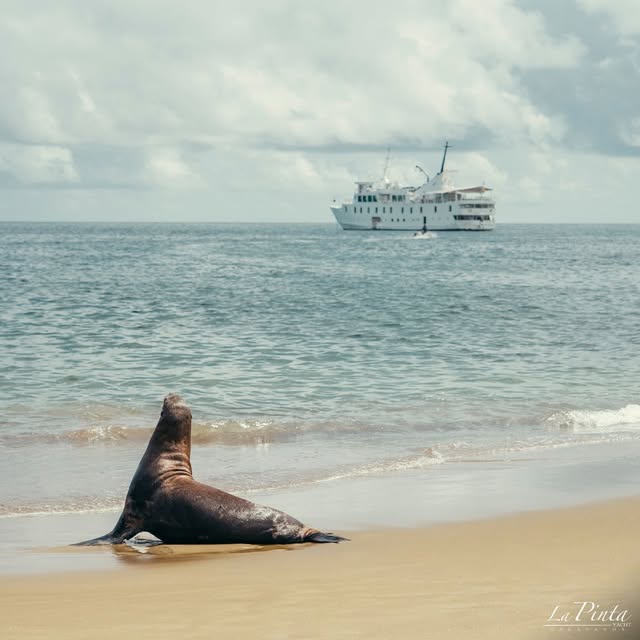
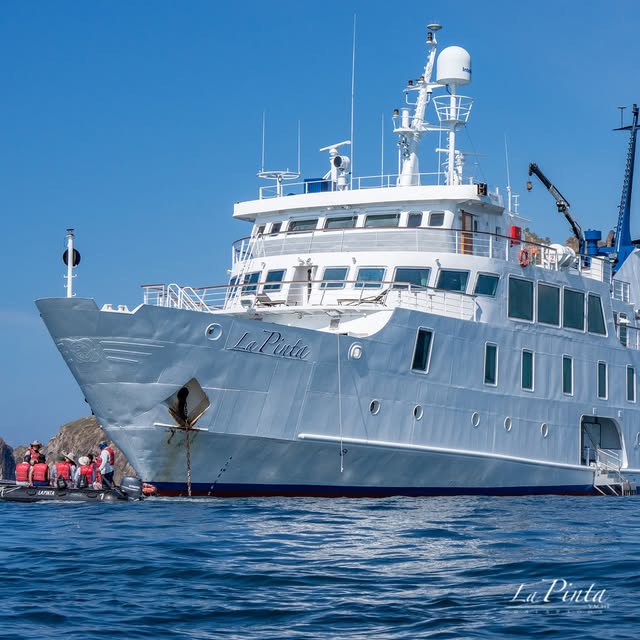
Yacht La Pinta’s modern design offers plenty of style and comfort throughout its interior and exterior spaces. It is the perfect size for exploring some of the most precious and hard-to-reach places in the Galapagos Islands. Sustainable sailing is a big component of Yacht La Pinta’s operations; the vessel utilizes several measures to help safeguard the ecosystem. This Galapagos Yacht measures approximately 209 feet (64 meters) and features 24 cabins that accommodate up to 48 guests. As four of these are connecting; they are ideal for groups of families or friends traveling together.
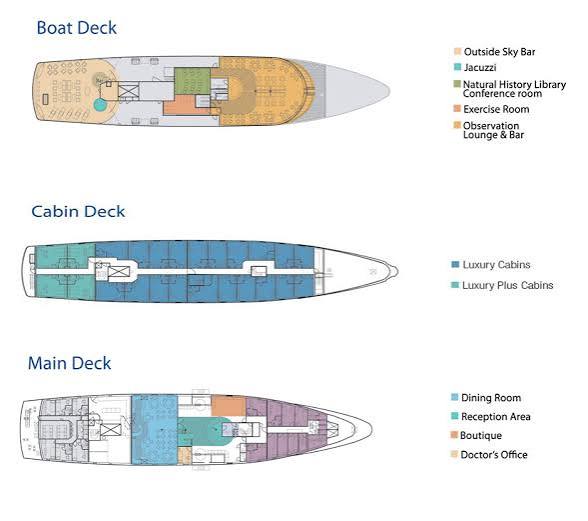
There is no shortage of contemplative and social spaces aboard Yacht La Pinta thanks to the Sun Deck, Sky Bar, natural history library, and all the quiet little nooks in between. By having as many as four expert naturalist guides as part of the crew, guests are treated to smaller expedition groups (of about 12 guests per guide) and more activity options. There are 2 trips to choose from - 7 and 10 day adventures. Lower fuel consumption is a reality thanks to modern technology integrated into the engine. Onboard water desalination and treatment systems, waste-recycling, and energy efficiency are key components that help minimize impact on the region.
Guests can admire sunny skies, sunsets, and starry nights from atop the Sun Deck, which features open and covered areas, such as the outdoor Sky Bar, a natural history library and conference room, an observation lounge, a hot tub, cardio gym, and more! (uncruise)
The vessel’s cabins are divided into the one- or two-passenger standard Luxury Cabin and the larger Luxury Cabin Plus, which features a comfortable sofa that sleeps one additional guest. Should folks traveling as part of a family or group wish to have connecting rooms, there are four pairs of cabins with this feature.
Experience the elegance of Yacht La Pinta’s modern and immaculate 24 cabins, providing comfortable accommodation for up to 48 guests. Each cabin features a private bathroom and vertical-rectangle windows. Perfect for families or groups, four pairs of cabins are available with connecting rooms for a seamless and enjoyable stay.
Luxury Cabins
It is an excellent cabin for guests traveling solo or in a couple. Some are inter-connecting.
Private bathroom with shower
8 of these cabins (4 pairs) can be interconnected
Size: 176.85 ft² / 16.43 m²
Capacity : 2 passengers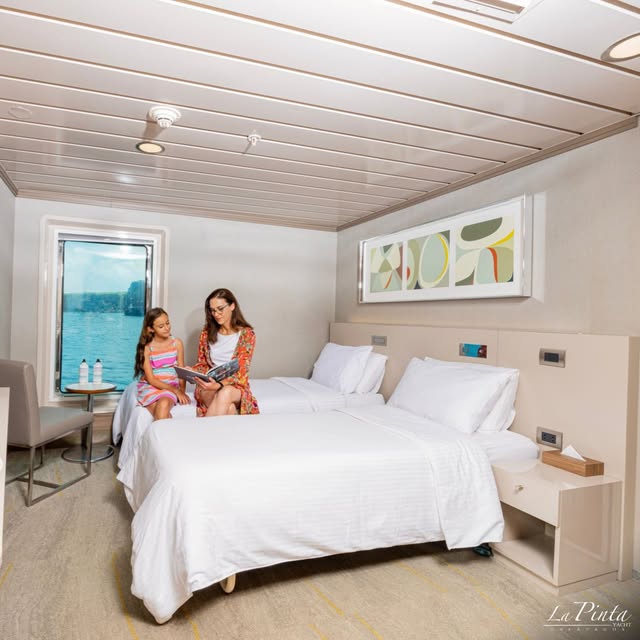
Luxury Plus Cabins
An excellent choice for small families, featuring a comfortable sofa that can accommodate an additional guest.
Private bathroom with shower
A total of 4 cabins
Size: 247.57 ft² / 23 m²
Capacity : 3 passengers.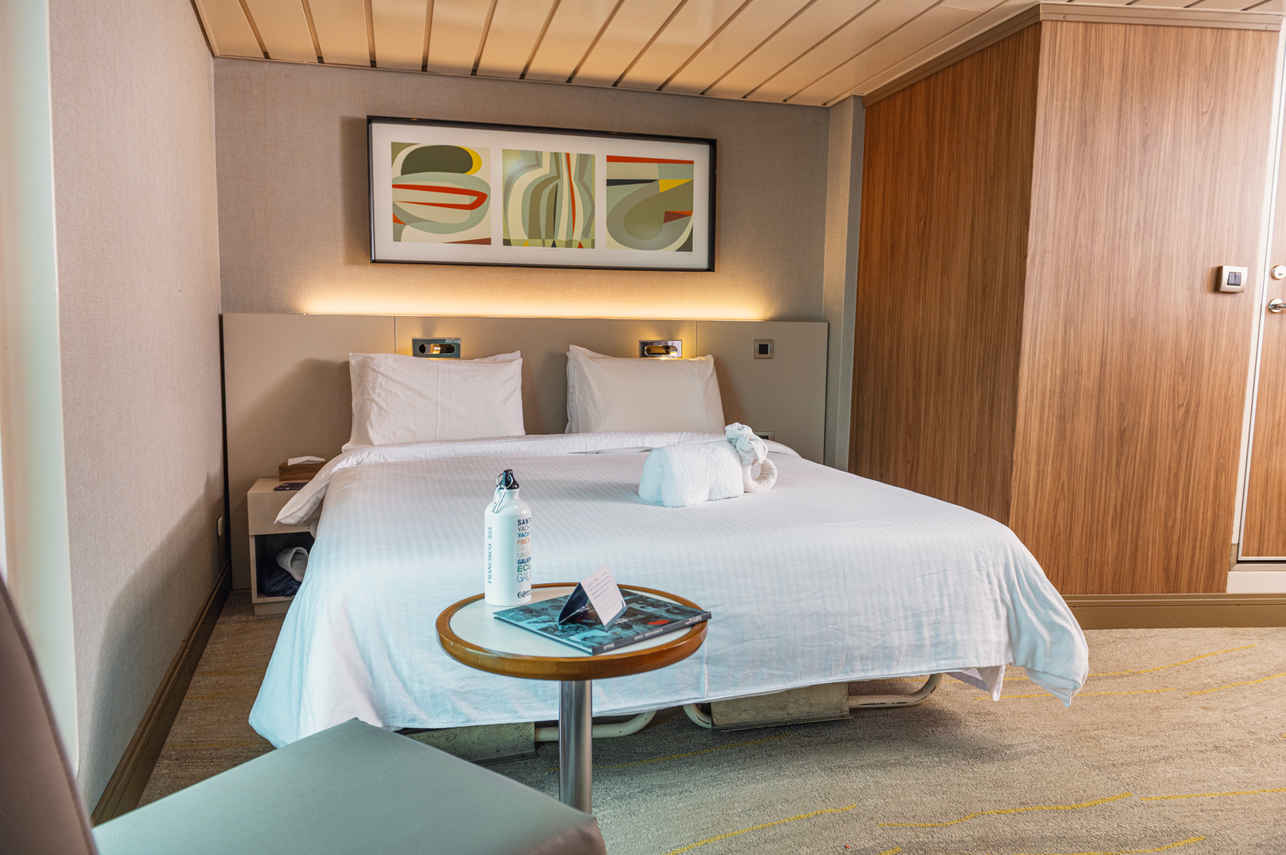
Origin of Species - 9 days (or 7 days)
Day 1: Baltra
Arrive at Baltra Airport and transfer to the dock — your 9-day Galapagos expedition begins the moment you step aboard Yacht La Pinta.
Welcome briefing and safety drill; meet your naturalist guide, the expert who will lead every landing for the next nine days.
Lunch aboard as the yacht repositions toward South Plaza — the first of eleven sites.
South Plaza Island
Afternoon wet landing on South Plaza — a narrow islet where land iguanas and sea lions divide territory within meters of each other.
Walk the trail edged with vivid prickly pear cactus and look down from the sea cliffs: Nazca boobies, swallow-tailed gulls, and frigatebirds ride the updraft below.
Your naturalist explains the hybrid iguana, a crossbreed of a land iguana and a marine iguana, found nowhere else.
Evening welcome cocktail and dinner aboard.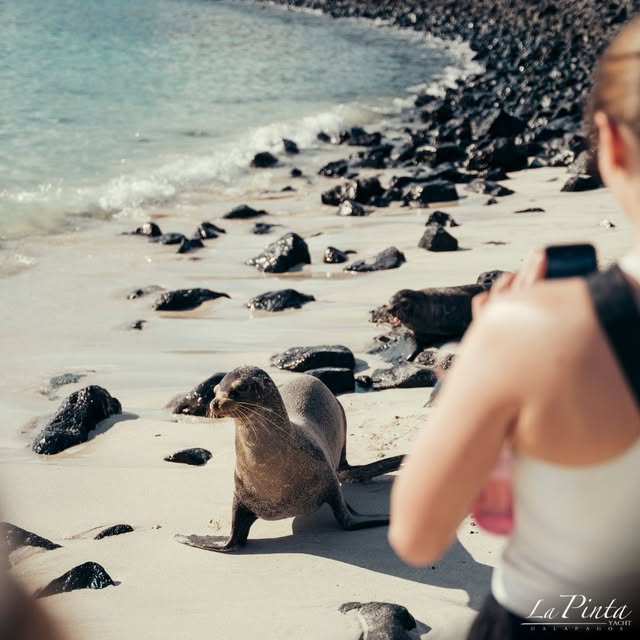
Day 2: Santa Fe
Morning dinghy landing at Santa Fe’s white-sand beach — sea lions claim every stretch of shore; green sea turtles surface in the bay.
Snorkel turquoise water and kayak along the coastline; your naturalist points out the Santa Fe land iguana — an endemic subspecies found on no other island on Earth.
Watch for the Galápagos hawk overhead as your guide explains island-by-island speciation — the same process Darwin struggled to articulate for twenty years.
Cerro Colorado Tortoise Center (San Cristóbal Island)
Afternoon at Puerto Baquerizo Moreno — the same port where Darwin disembarked in September 1835.
Visit the Cerro Colorado giant tortoise breeding center: hatchlings in enclosures, adults moving freely through open pasture.
Spot San Cristobal mockingbirds and lava lizards along the trail before returning to the yacht.
Day 3: San Cristobal
Morning hike at Punta Pitt on San Cristobal’s eastern tip — the only site in the Galapagos where red-footed, Nazca, and blue-footed boobies all nest together.
Your naturalist explains why this convergence exists here, and nowhere else in the archipelago.
Spot bachelor sea lion colonies on the rocks; optional panga ride for coastal wildlife viewing along the volcanic cliffs.
Cerro Brujo
Afternoon at Cerro Brujo — one of the finest beaches in the Galapagos, backed by eroding tuff formations and fronted by crystalline water.
Swim or snorkel above lava rock formations teeming with reef life; marine iguanas and shorebirds move along the waterline.
The Galapagos does not ask you to hurry. Cerro Brujo is the place to remember that.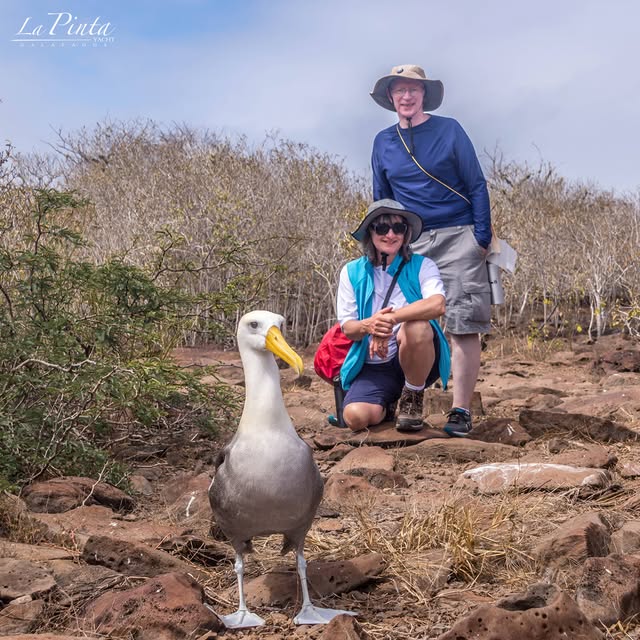
Day 4: Espanola
Morning walk along Punta Suarez — the path winds through an active waved albatross colony (present April–January); the only nesting site for this species on Earth.
Blue-footed boobies perform their full courtship display within arm’s reach; your naturalist narrates every gesture.
Española’s marine iguanas are the most vivid in the archipelago — the red-and-green coloring of this population exists nowhere else.
A natural blowhole at the island’s southern tip marks the trail’s dramatic finale.
Gardner Bay
Afternoon at Gardner Bay — white coral sand, turquoise water, and a sea lion colony that makes no room for anyone.
Snorkel, kayak, or take the glass-bottom boat; sea turtles and reef sharks move through the water below.
Walk the beach with Española mockingbirds and Darwin’s finches at your feet — the snorkeling here is the kind travelers describe for the rest of their lives.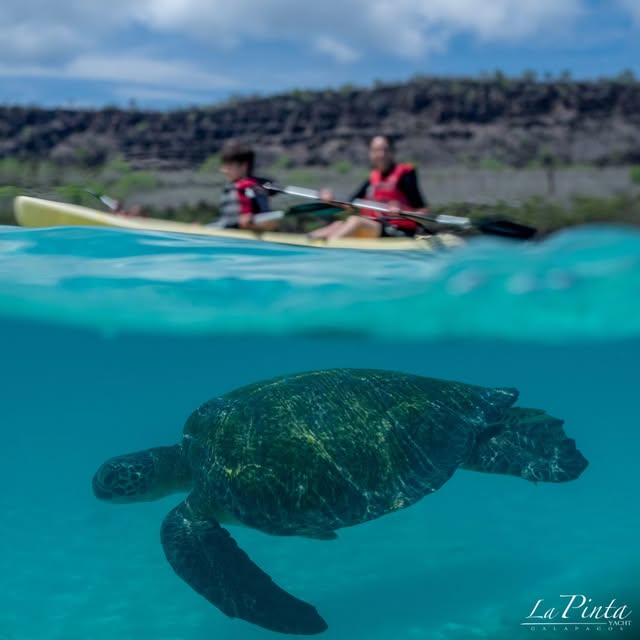
Day 5: Santa Cruz + Darwin Station
Morning at the Charles Darwin Research Station in Puerto Ayora — giant tortoise breeding pens and active conservation science you can walk through.
Your naturalist connects the research to the wildlife you have encountered across four days at sea — the evolutionary argument made visible.
Explore Puerto Ayora before the bus transfer to the Santa Cruz highlands.
Santa Cruz Highlands
Afternoon in the highlands: walk among giant tortoises moving freely through open pasture — animals that have outlasted every human civilization that has tried to describe them.
Enter lava tunnels carved by ancient volcanic flows; your naturalist reads the island’s geological record as you walk.
Dinner aboard as the yacht repositions north — the second half of your expedition begins tonight.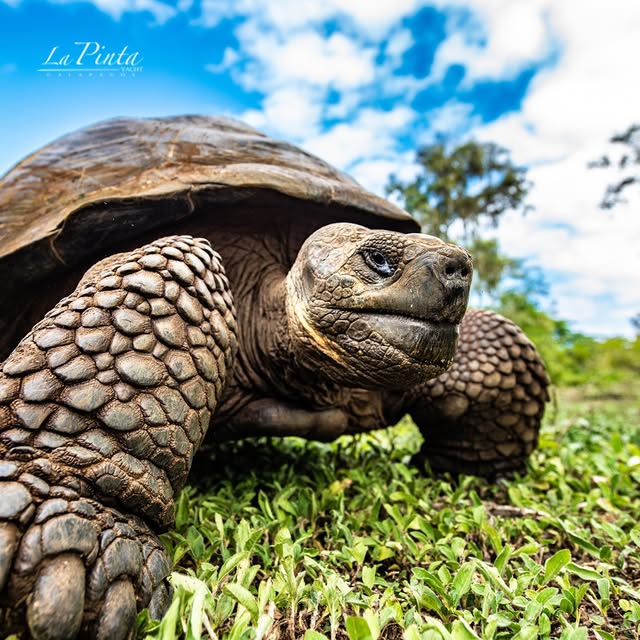
Day 6: Eden Islet (Santa Cruz Island)
Morning panga ride to Eden Islet — a volcanic outcrop off the coast of Santa Cruz, teeming with seabirds and marine life.
Spot blue-footed boobies plunge-diving, reef sharks patrolling the shallow edges, and frigatebirds overhead.
Snorkel or take the glass-bottom boat through lava formations and coral gardens.
Chinese Hat Islet
Afternoon landing on Chinese Hat Islet, formed by a single eruption into the distinctive cone shape that gives it its name.
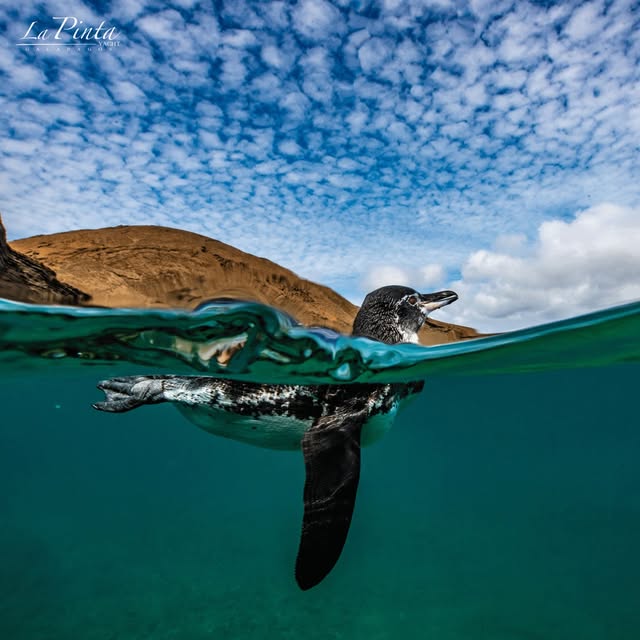
Walk a 400-meter trail from a white-sand beach; snorkel in shallow volcanic waters where Galapagos penguins dart past, and reef sharks hold still beneath you.
Your naturalist traces the evolutionary line from Humboldt penguins to the equatorial Galapagos population — the only tropical penguin on the planet.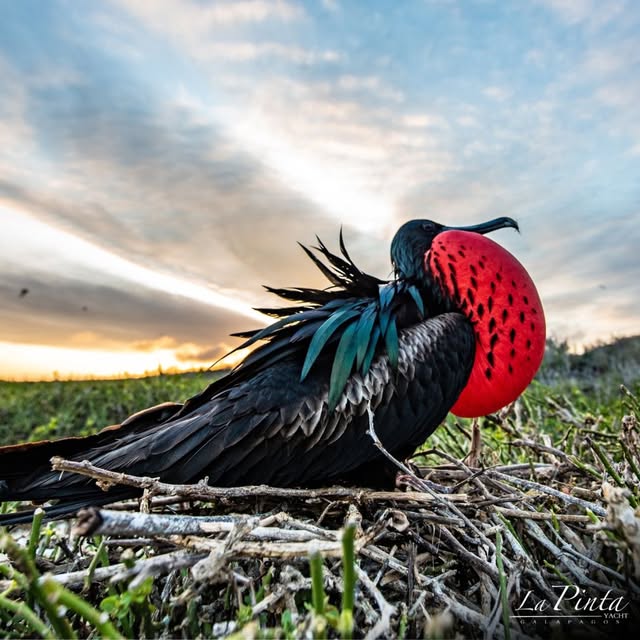
Day 7: Bartolome Island
Morning hike up Bartolome’s wooden staircase to the summit — the most iconic panoramic view in the Galapagos: Pinnacle Rock rising from turquoise water.
Panga rides around Pinnacle Rock; Galapagos penguins dart beneath the hull, and marine turtles surface beside the boat.
Beach landing for snorkeling and swimming; the glass-bottom boat reveals an underwater world in the same turquoise frame as the postcard above.
Sullivan Bay (Santiago Island)
Afternoon at Sullivan Bay — one of the most otherworldly landscapes in the archipelago.
Walk across a pahoehoe lava field estimated at fewer than 130 years old: ropey, ridged, and still largely uncolonized by vegetation.
Your naturalist reads the geological record aloud — layers of eruptions, each one adding new ground where there was only ocean.
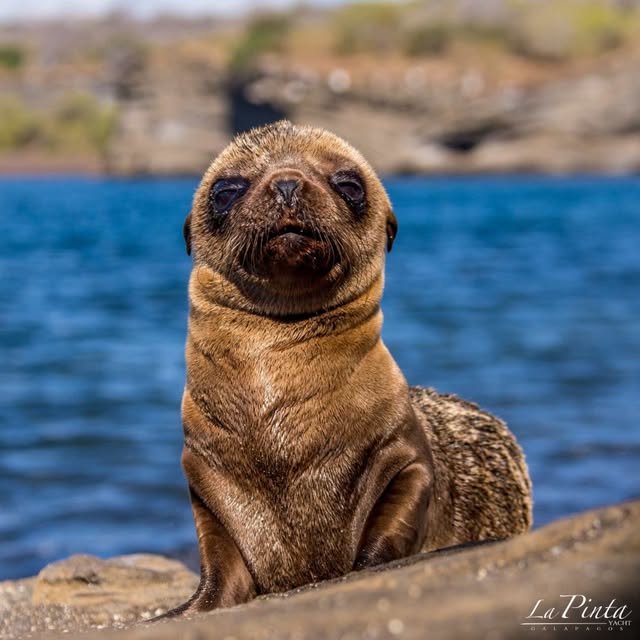
Big 15: Galapagos Penguin · Green Sea Turtle · Galápagos Sea Lion · Marine Iguana · Brown Pelican · Sally Lightfoot Crab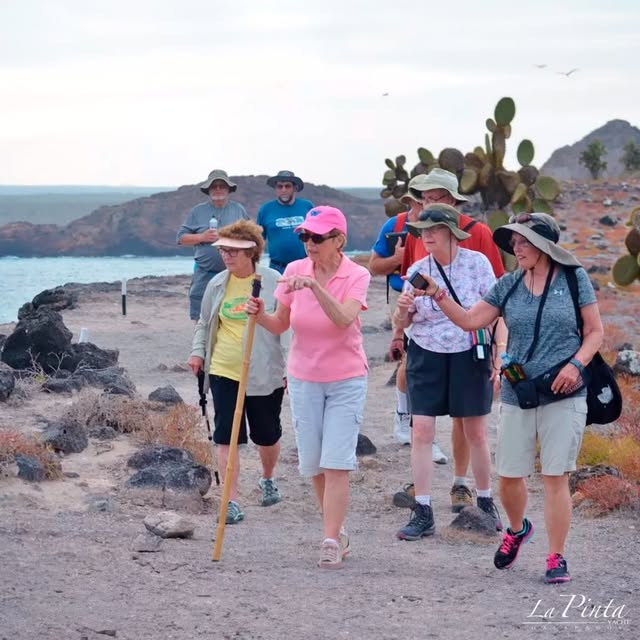
Day 8: Prince Philip’s Steps (Genovesa Island)
The yacht crosses the equator overnight — arrive at Genovesa Island (Tower Island), the most remote island in the archipelago, at dawn.
Climb the wooden staircase of Prince Philip’s Steps to one of the great wildlife corridors on Earth.
Red-footed boobies nest at eye level in palo santo trees — the only site in the Galapagos where this species nests in such density.
Short-eared owls hunt in broad daylight, patrolling the colony for storm-petrels; Galapagos fur seals rest in rocky crevices along the cliff edge.
Darwin Bay
Afternoon at Darwin Bay — a white coral beach inside Genovesa’s submerged caldera.
Walk the shoreline with great frigatebirds and Nazca boobies nesting within arm’s reach.
Snorkel the crystal-clear bay; hammerhead sharks move in the deep water beyond the reef.
Optional kayaking along the caldera walls for a view of Genovesa that only the water reveals.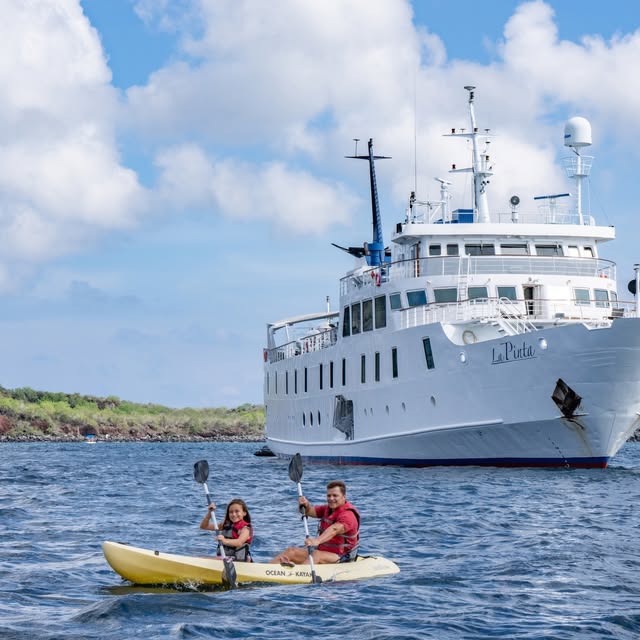
Day 9: Baltra Airport
We proceed to the airport for our return flight to the mainland.
* The boat also operates a 7-day trip as well. Contact us for more trip details, dates, rates + bookings.