Embark on our very spacious and comfortable “Superior First Class” motor yacht with panoramic windows in the salon and great deck space to enjoy your holiday. The motor yacht Beluga is a fantastic way to cruise the Galapagos Islands in speed and style.
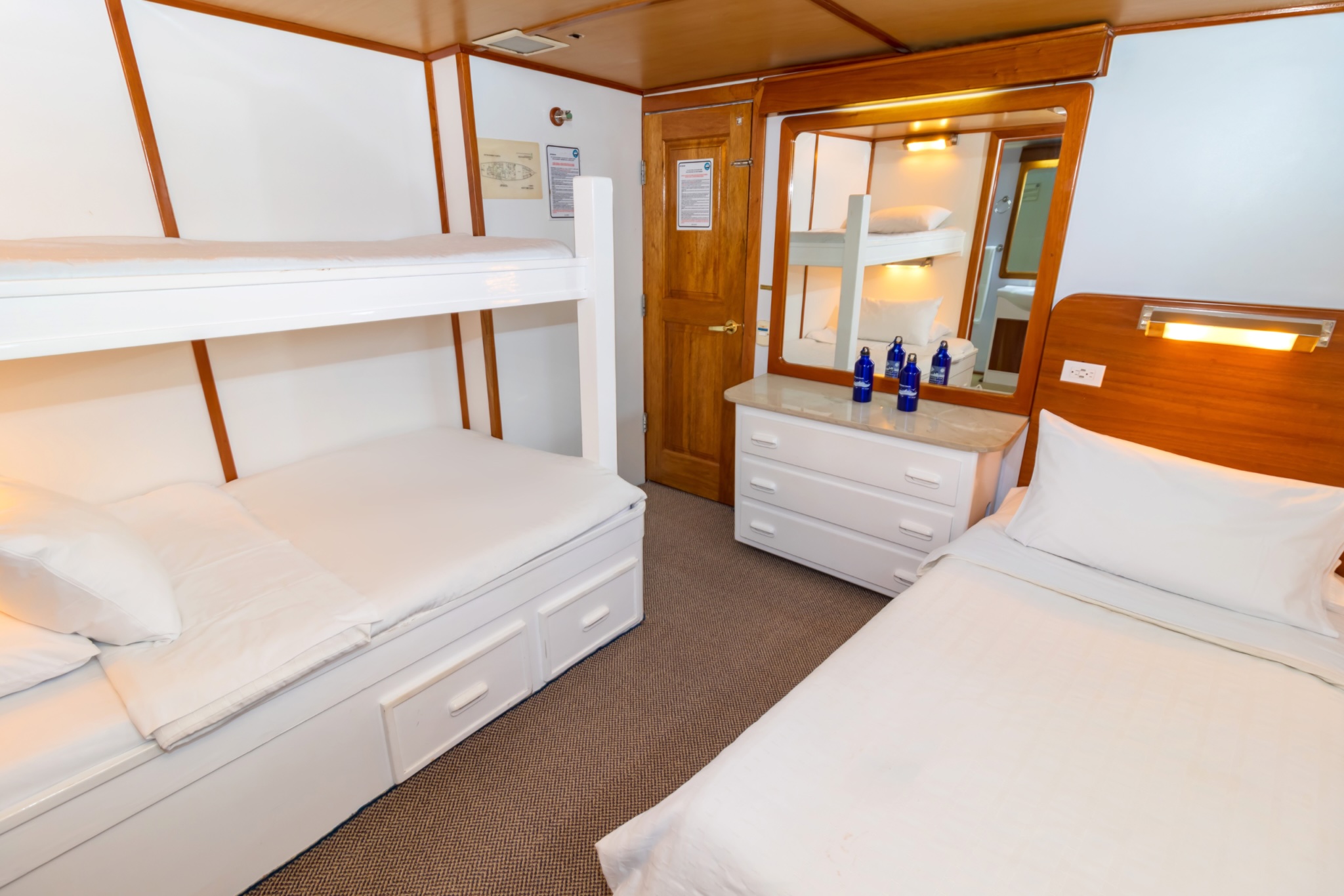
Equipped with the most modern safety and mechanical equipment, Beluga accommodates 16 passengers in 8 double cabins; one of these has an additional berth which becomes a triple room that is suitable for families. Each cabin has its own private bathroom equipped with hot and cold water showers.
Beluga is fully air-conditioned, has spacious social areas with all the comforts and facilities of a superior first class motor yacht: panoramic windows in the salon / dining area, and a large sundeck for relaxing, sightseeing or sunbathing. The Beluga Galapagos cruise’s friendly and professional crew will make sure to fulfill your every need during your journey making for a once in a life time Galapagos expedition. (enchantedexp)
Specifications
The Beluga is a fully air-conditioned, spacious and comfortable motor yacht. The salon is equipped with flat screen TV and DVD systems.
Category: Superior First Class
Capacity: 16 passengers
L.O.A: 110 ft.
Beam: 23 ft.
Cruise Range: 12 knots cruising.
Type: Motor Vessel, Steel hull
Mechanical Equipment: Twin Scania Diesel Electronic 450 HP each, 3 Perkins generators for 110v and 220v, 2 reverse osmosis water makers, auto pilot system, sewage treatment plant
Safety Equipment: VHF (DSC) & HF (DSC) radios. EPIRB, SART, satellite tracking device, 2 GPS’s, 2 radars, depth sounder, flares, basic first aid kits, 2 tenders with outboards, fin keels for extra stability, flotation rings, life rafts with surplus capacity for all passengers and crew, fire alarm system.
Guest Accommodation: 8 Double cabins each with private bath. Hot / cold water showers. Security safe in each cabin.
Crew: All crew are fully trained and certified. Captain, multilingual naturalist guide, cook, 2 engineers, barman, and 4 sailors.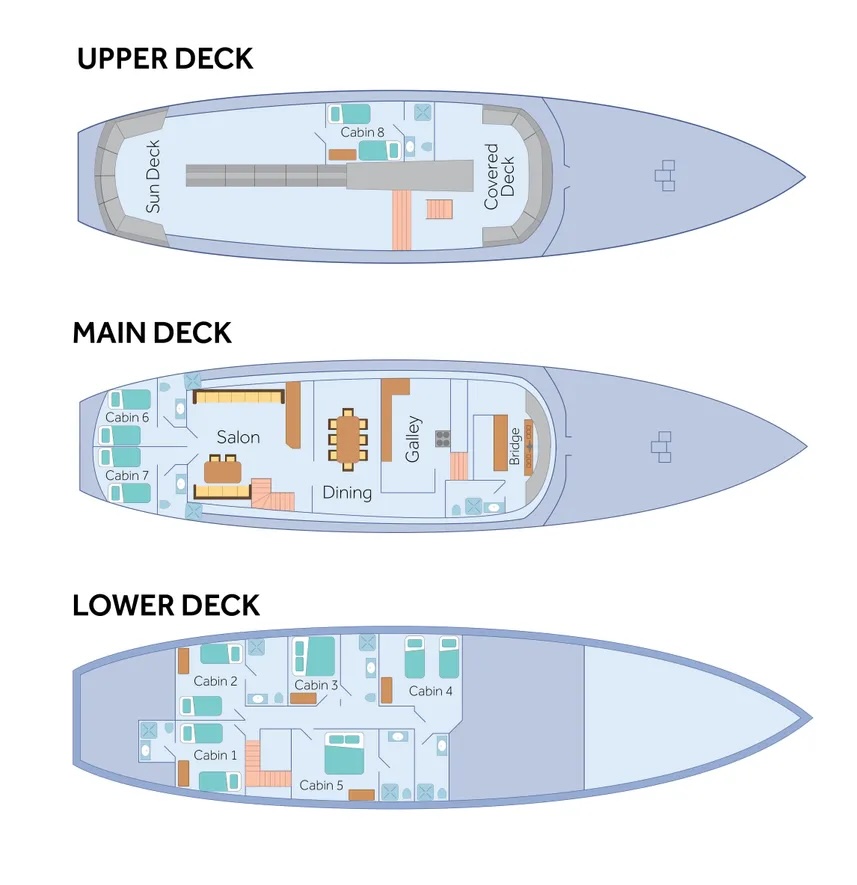
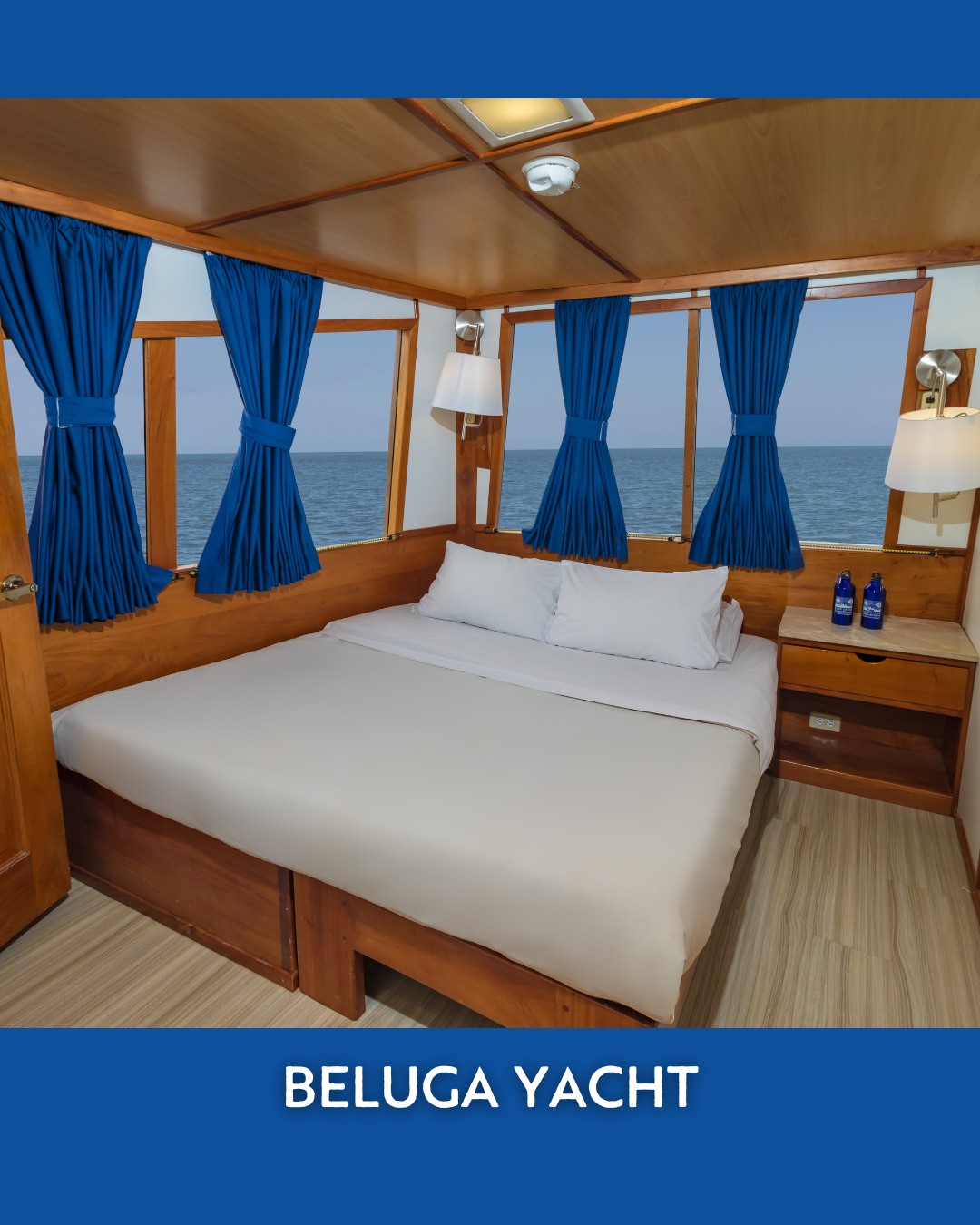
Cabins:
Catering to just 16 passengers, the Beluga yacht has 8 double or twin-bedded cabins. Each cabin has AC, security safe and private bathrooms with hot & cold showers.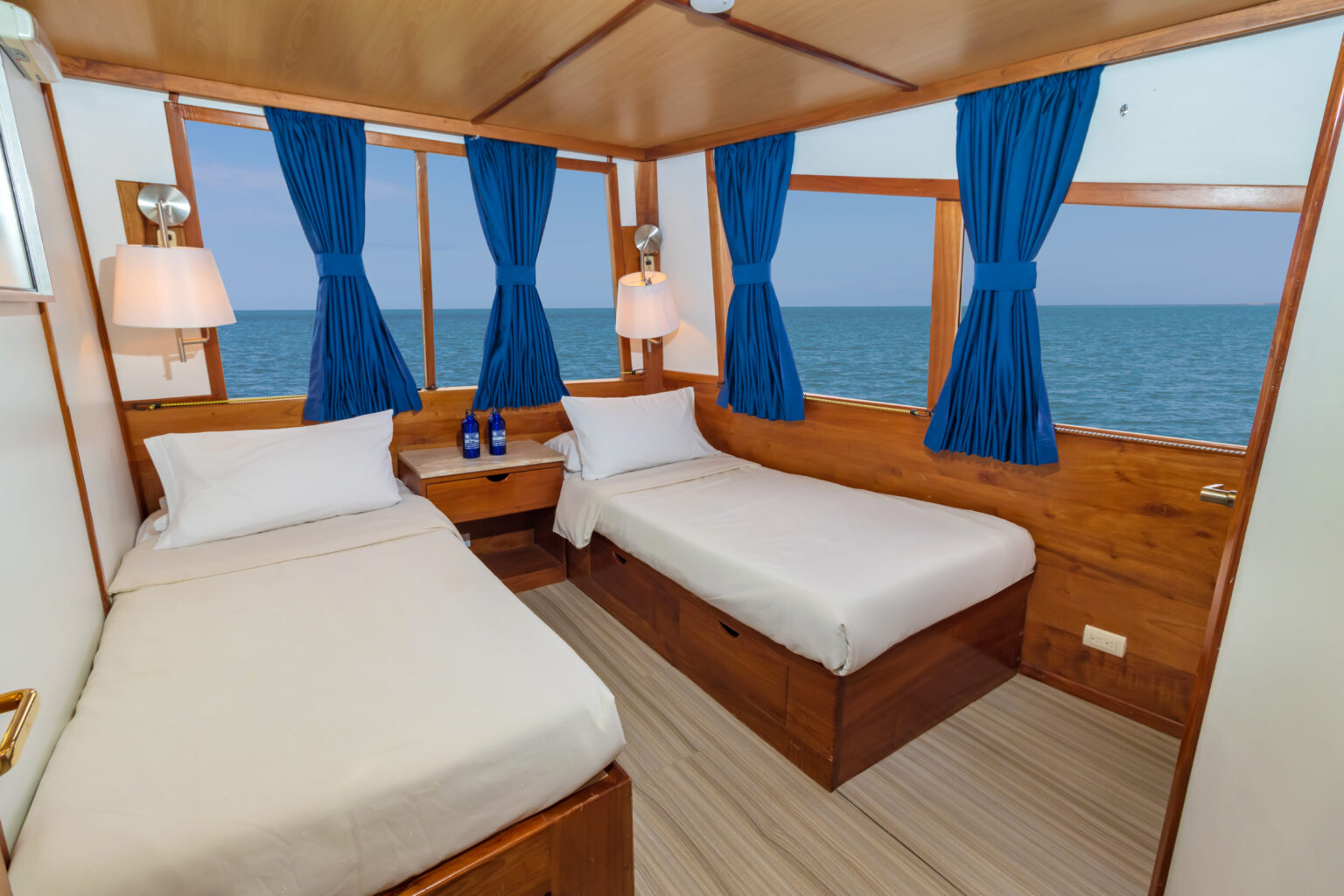
Beluga offers the options of a 6 day and 8 day itineraries that visit selected sites which are approved by the National Park; each of these is unique, rich and varied and offers the opportunity to experience the Galapagos up close and personal with a small group led by a highly experienced naturalist guide. The itineraries can be combined to form a 15-day itinerary that we highly recommend for those travelers that would like to have a complete, in-depth experience of the Galapagos Islands.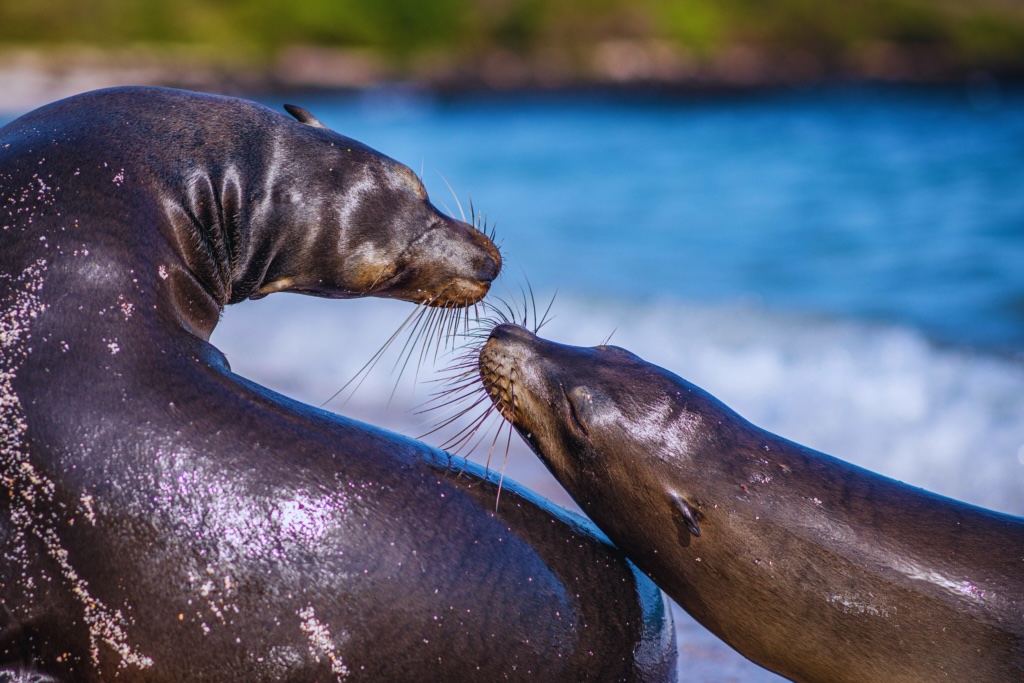
Sample Itinerary (7 nights)
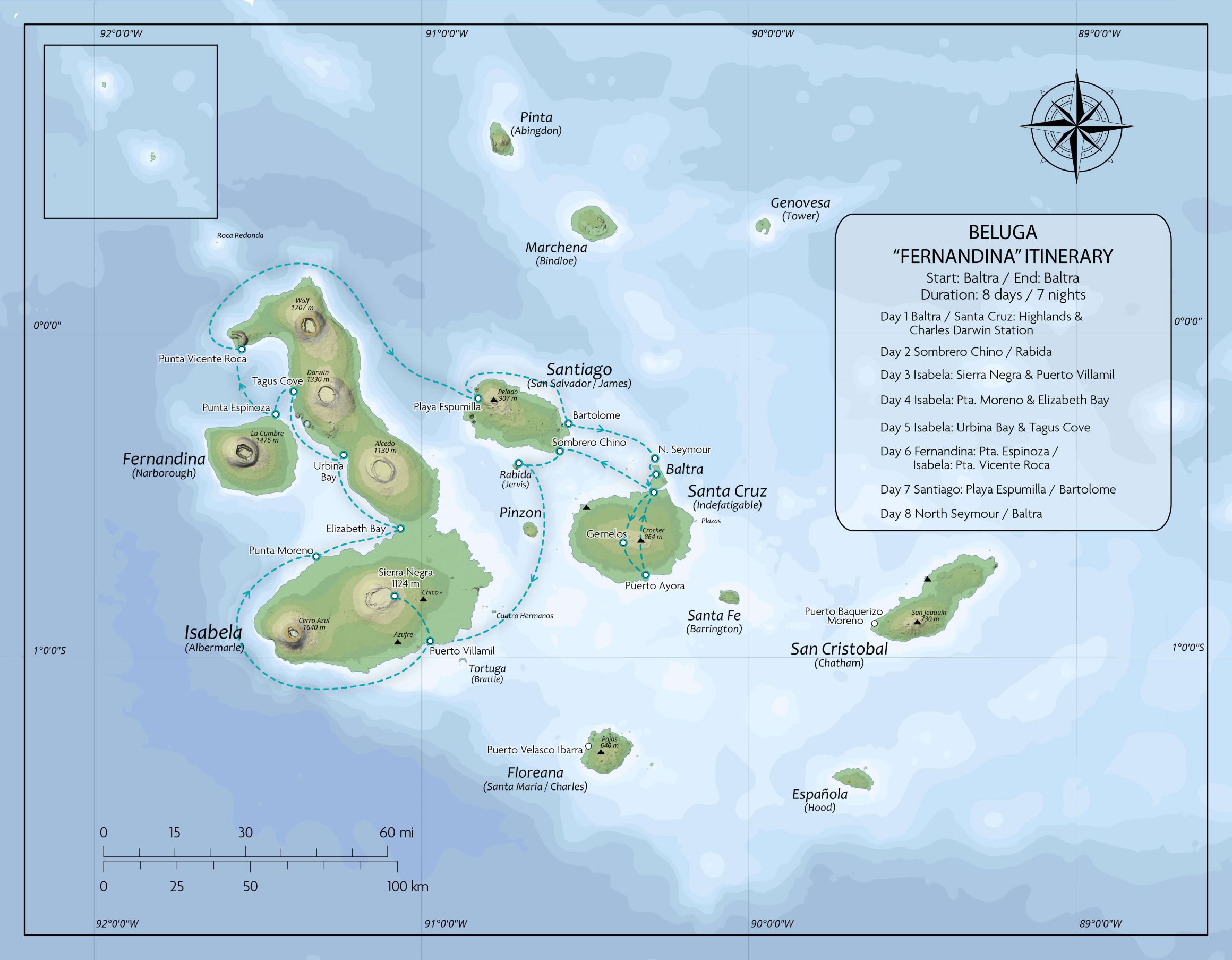
The Beluga yacht trip “Fernandina” itinerary focuses on the Central and Western Islands, including visits to Western Isabela and Fernandina Island, two highlights of the Galapagos Islands.
Day 1 (Wednesday): Arrive at Baltra Airport / Santa Cruz Island
Santa Cruz Island
Highlands of Santa Cruz: Galapagos giant tortoises can be seen in the wild in the highlands of Santa Cruz
Charles Darwin Station: Visit the Charles Darwin Station is a research facility and National Park Information center. The Charles Darwin Station has a giant tortoise and land iguana breeding program and interpretation center.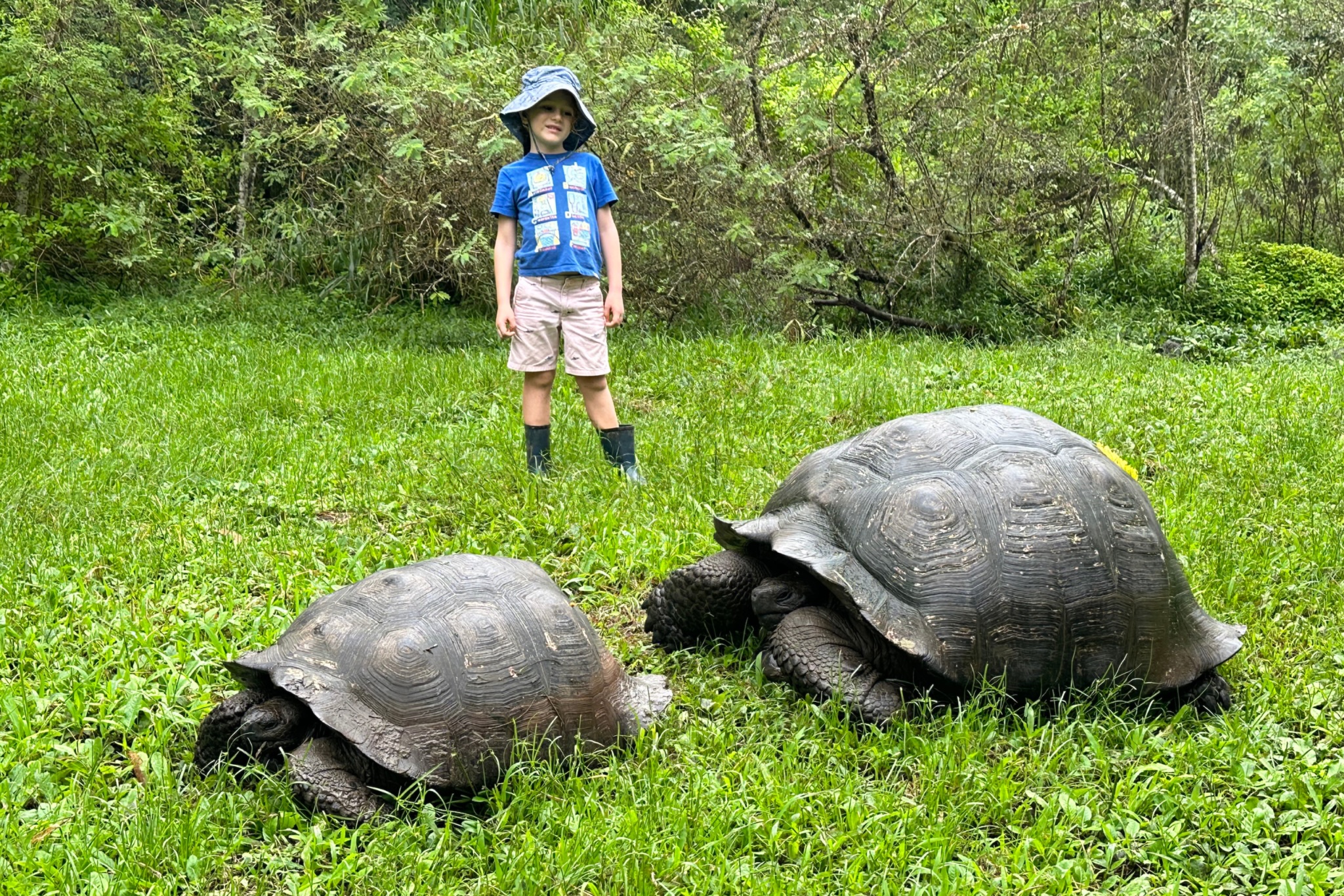
Day 2 (Thursday): Sombrero Chino Island / Rábida Island
Sombrero Chino: Sombrero Chino is a small volcanic island just off the southeast tip of Santiago. The name of the island describes the shape of the island. Fauna includes Sea lions, marine iguanas and the Galapagos penguin.
Rábida Island: Rábida is a small island with a dark red coral sand beach. Highlights include the lagoon with flamingoes, pelican nesting site, sea lion bachelor colony, and a snorkeling site at the end of the beach.
Day 3 (Friday): Isabela Island
Isabela Island (Albemarle): Isabela is the largest of the Galapagos Islands formed by five active volcanoes fused together. Wolf Volcano is the highest point in the entire Galapagos at 1707m.
Sierra Negra : Volcan Sierra Negra has a caldera with a diameter of 10km. View recent lava flows, moist highland vegetation, and parasitic cones.
Puerto Villamil: Puerto Villamil is a charming small town on a white sand beach. Highlights include the Tortoise Breeding Station and the flamingo lagoon. Other visits (depending on conditions) are the Tintoreras or Los Humedales.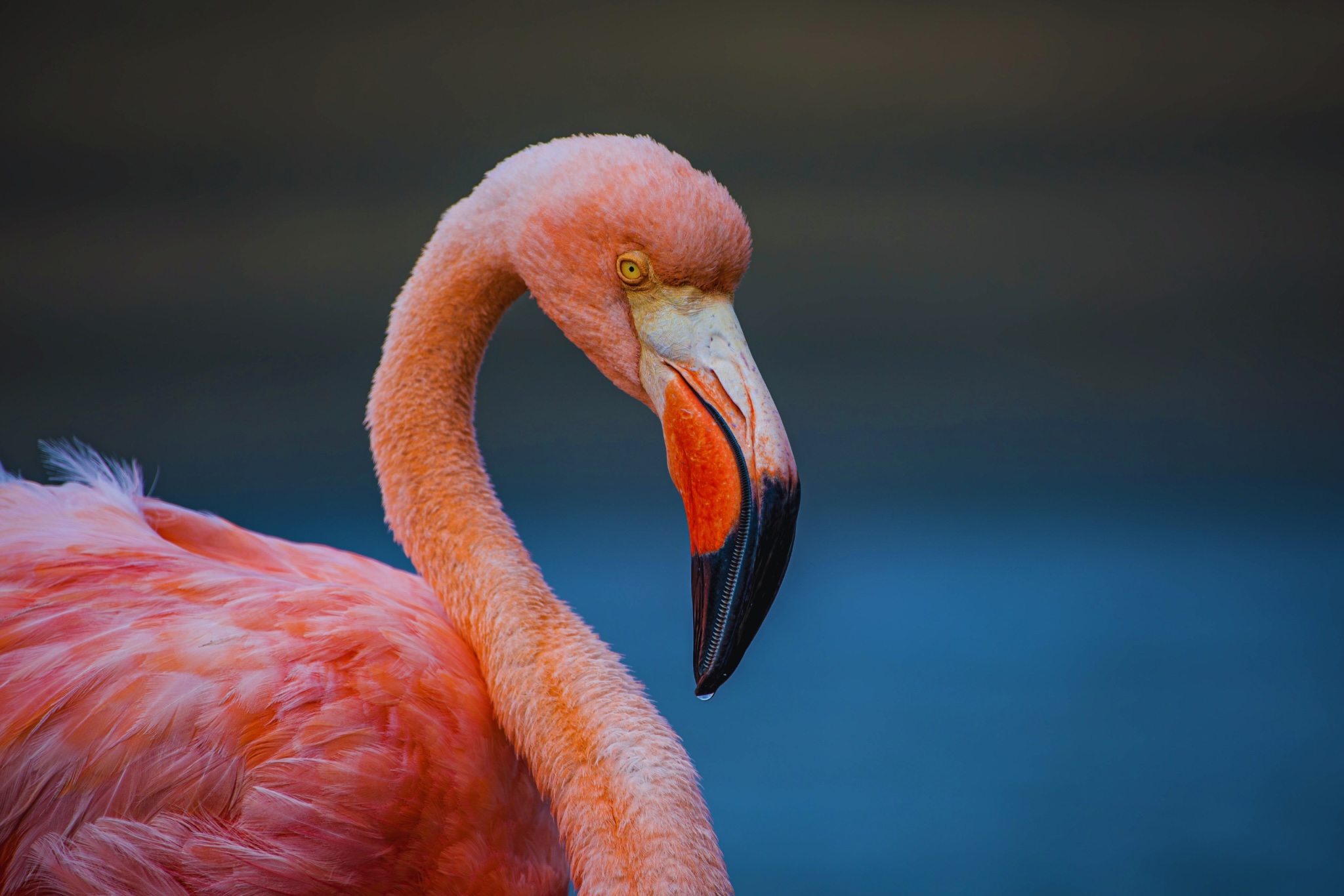
Day 4 (Saturday): Isabela (Albemarle) Island
Punta Moreno: Punta Moreno is located in the central southwestern coast of Isabela Island. The site has spectacular views of volcanoes Alcedo, Sierra Negra and Cerro Azul. Some highlights include impressive lava flows, desolate and pristine landscape, varied and unusual arid zone vegetation.
Elizabeth Bay: This spot is only accessible by dinghy. It is possible to see penguins on the small islets in the bay. The end of the bay is long and narrow surrounded by three species of mangroves. Galapagos Sea Turtles and rays can usually be seen in the water.
Day 5 (Sunday): Isabela (Albemarle) Island
Urbina Bay: Urbina Bay is located at the central-west coast of Isabela Island at the foothills of Alcedo and Darwin volcanoes. Highlights include the colourful land iguanas, Galapagos Giant tortoises and the coral uplifting from 1954.
Tagus Cove: Tagus Cove is a natural harbor where centuries ago whalers and pirates left their ship’s names painted or carved on the rocks. A walk uphill to Darwin’s Crater salt-water lake will provide an excellent view.
Day 6 (Monday): Fernandina Island / Isabela Island
Fernandina Island: Fernandina is the youngest volcanic island and is still active.
Punta Espinoza: Punta Espinoza is a place famous for its large colonies of marine iguanas and as the habitat of unique species like the flightless cormorant, Galapagos penguin, Galapagos hawk, Galapagos snake, among others.
Isabela Island
Punta Vicente Roca: This site is visited by dinghy rides along the cliffs or the partially sunken cave at the water’s edge. Nasca boobies, blue-footed boobies and flightless cormorants inhabit the shoreline.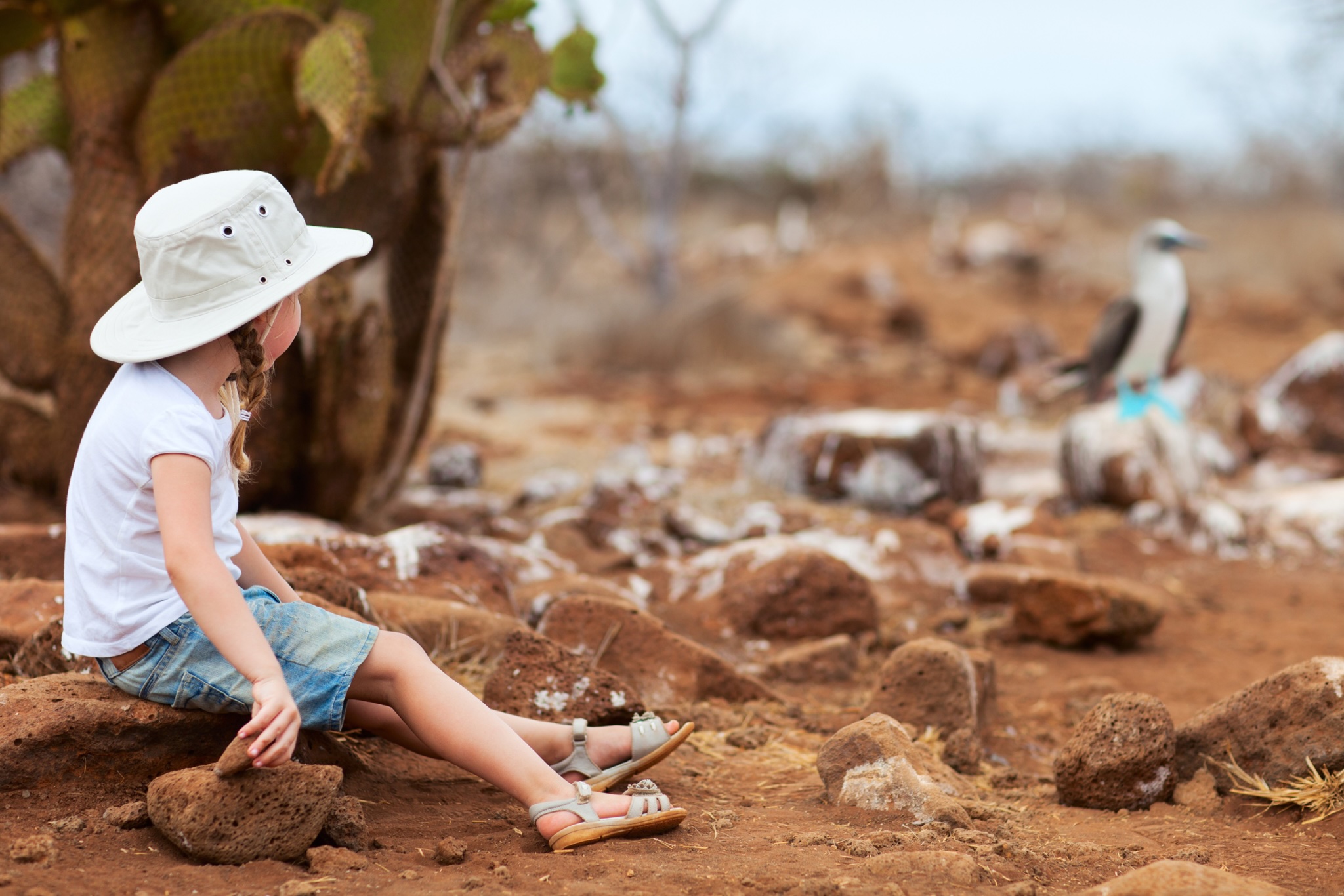
Day 7 (Tuesday): James (Santiago) Island / Bartolome Island
James (Santiago) Island: This Island is located between Isabela and Santa Cruz Islands. This Island offers a wide variety of seabirds, marine iguanas and fur seals.
Playa Espumilla: Espumilla Beach has a beautiful contrast between the golden beach and the green mangroves. It is also a great site to see flamingos, pintail ducks, green sea turtle nests and the Galapagos Hawk. It is also a good site to go for a cool off swim or a snorkel.
Buccaneers Cove: This site was Charles Darwin’s home for 9 days. As well as a resting site for many whalers and pirates. With this rich history Buccaneers Cove is a must see. Enjoy a panga ride or snorkel looking for Galapagos Fur Seals, Brown Noodies, Pelicans, and Swallow-tailed Gulls
Bartolome Island: A hike will take you to the highest point on Bartolome for a spectacular view. Sea lions and penguins can be seen around Pinnacle Rock. There is a sandy beach with great swimming and snorkeling.
Day 8 (Wednesday): North Seymour Island / Baltra for return flight to Quito
North Seymour Island: This flat piece of land originated after an uplifting event thousands of years ago. The island is home to endemic Palo Santo trees, colonies of blue-footed boobies, swallow tailed gulls, and magnificent frigate birds.
Baltra: Return flight to Quito
* To discover the northern and southern parts of the Galapagos Islands, check out our Beluga Tower and Hood Island trip itinerary.