
A 6-Day Mapari Expedition
A 6-day tour is perfect if you have limited time for a remote wilderness experience. A variety of daily activities such as birding excursions, wildlife spotting, hikes on forest trails, quiet drifts on Mapari creek at dawn or dusk, and night drifts using the beam of a spotlight can all be arranged.
Day 1: Lethem-Rupununi River-Mapari Wilderness Camp
After arriving in Guyana, you will transfer from the capital city of Georgetown to Lethem via small plane. After the hour-long flight, board small boats to travel south, up the Rupununi River, spotting birds and wildlife as you pass through the savannahs into primary rainforest. After a few hours, we arrive at the Mapari Wilderness Camp, enjoy a delicious dinner, and let the sounds of the jungle, and nearby Mapari Falls serve as your lullaby.
Day 2: Mapari Wilderness Camp
With coffee cup in hand, take an early morning river drift down the creek, keeping an eye out for monkeys, giant otters, and other wildlife. After breakfast, swim or relax at the natural bathing pools formed by the creek and the falls. Or take a mountain hike in search of forest birds, snakes, and other reptiles.
Following lunch, there is the option of a trail walk to search for more wildlife, or a river drift at sunset. Dinner is served around the campfire, hosted by guides sharing stories of their lives in the rainforest.
Day 3: Mapari Wilderness Camp
Awaken to the dawn chorus of howler monkeys, macaws and parrots. A highlight is a visit to a Harpy Eagle nest. When active, and with a little luck, you’ll see the largest and most powerful eagle in the world. Additional activities include a forest walk to learn about the trees, plants, and their uses- both commercial and traditional. Post-lunch activities can include bathing in the creek, fishing, napping in your hammock, exploring more trails or an afternoon river drift.
Day 4: Mapari Wilderness Camp
Options include early birding on a forest trail, another drift down the creek, or you can try hand-line fishing. Perhaps a visit to a tarantula burrow? After dinner, you can go wildlife spotting along the creek. In the beam of the spotlight, look for Amazonian tree boas, emerald boas, frogs, dwarf caiman, paca and opossums. Occasionally, tapir or capybara can be spotted. Past lucky guests have been treated to an ocelot stalking along the creek edge.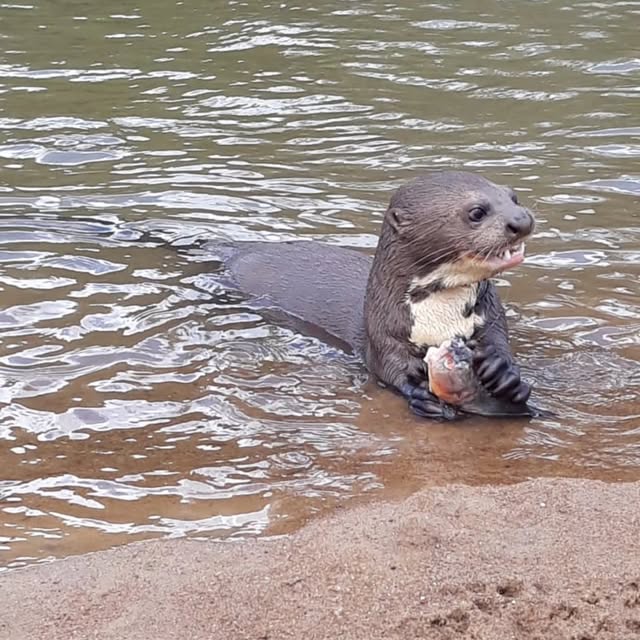
Day 5: Caiman House
While the crew breaks camp, you will go wildlife spotting and birding along forest trails, then return to camp for breakfast. Next,we head back down the river to Caiman House, arriving in the late afternoon. Once you settle into this rustic, but comfortable research centre and eco-lodge, you can explore the village of Yupukari, and learn more about the way of life there. After dinner (and after dark), if the conditions are permitting, you can join the black caiman research team on a caiman tagging expedition. This is a singular experience, and a rare opportunity to come in direct—yet safe—contact with the largest member of the alligator family.
Day 6 Georgetown
Return to Georgetown for fond farewells. (emergdest)